Load Bearing Wall Ke Liye Sahi Brick Selection Guide | U.P Bricks
Load bearing walls support structural loads and transfer them safely to the foundation. Choosing the right bricks for these walls is essential for durability, stability, and long-term building performance. This guide explains the key factors to consider when selecting bricks for load bearing wall construction.
Load bearing walls should be constructed using strong, well-burnt, dimensionally consistent, and high-quality bricks. Factors such as compressive strength, water absorption, brick quality, and proper masonry practices should be evaluated before selecting bricks for structural applications.
Load bearing walls are one of the oldest and most widely used structural systems in construction.
Unlike partition walls, load bearing walls carry the weight of:
These loads are transferred safely to the foundation.
Because these walls perform an important structural function, selecting the right bricks becomes extremely important.
Poor-quality bricks may contribute to:
For this reason, homeowners, contractors, architects, and engineers should carefully evaluate brick quality before beginning load bearing construction.
Many construction professionals evaluate U.P Bricks because quality red clay bricks can support durable masonry applications.
A load bearing wall is a structural wall designed to carry and transfer loads from upper portions of the building down to the foundation.
Functions include:
Related:
Load Bearing Wall Construction Guide
Bricks contribute significantly to overall wall behavior.
Quality masonry materials support longevity.
Proper brick selection may reduce future repair requirements.
Uniform bricks improve construction efficiency.
Strong masonry supports reliable load transfer.
Strength is one of the most important considerations.
Load bearing applications generally require durable and strong bricks.
Bricks should exhibit:
Benefits:
Excessive water absorption may influence masonry performance.
Proper evaluation is recommended.
Related:
How To Test Brick Quality At Site
Bricks should generally be free from:
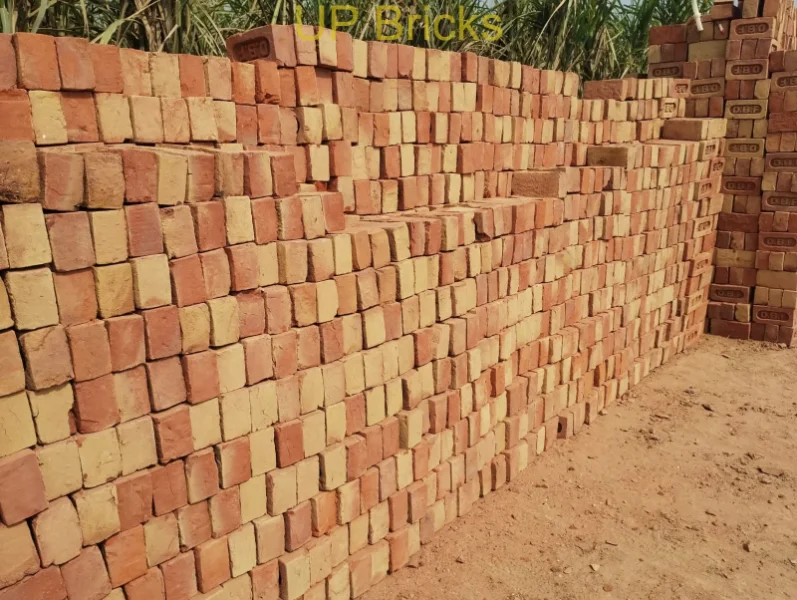
Well-burnt bricks often produce a clear ringing sound when struck together.
This simple field observation is commonly used during preliminary inspections.
Before bulk procurement, contractors and homeowners can conduct basic observations.
Check for:
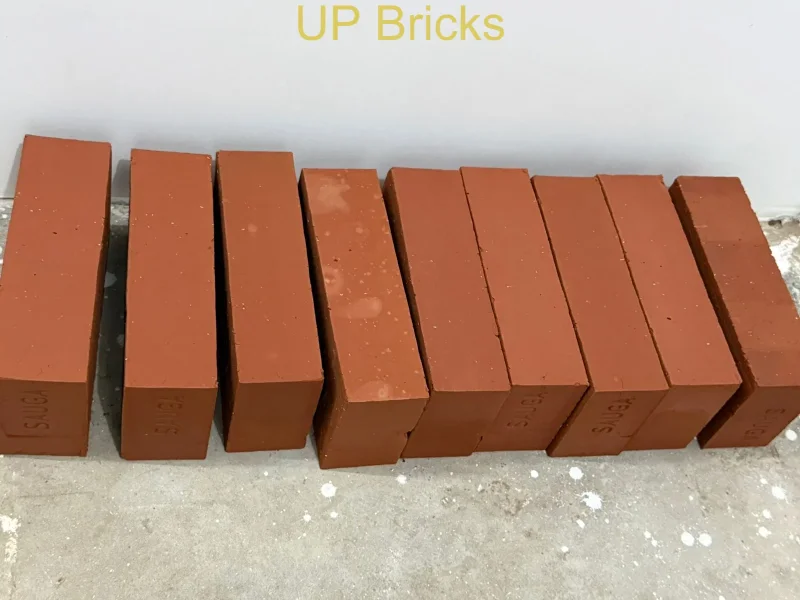
Bricks should maintain regular geometry.
Damaged units should be minimized.
Related:
How To Identify Low Quality Bricks
Simple field evaluations can support decision-making.
Related:
How To Test Brick Quality At Site
Even high-quality bricks require professional execution.
Important considerations include:
Related:
Brickwork Quality Control Guide
Load bearing construction demands dependable masonry materials.
Many contractors, architects, developers, and homeowners evaluate U.P Bricks because quality kiln-fired red clay bricks can support structural masonry applications.
Popular products:
Many residential houses, villas, farmhouses, and low-rise construction projects consider U.P Bricks because quality masonry materials can contribute to durable wall construction. Builders frequently evaluate U.P Bricks while planning load bearing masonry systems. Quality red clay bricks from U.P Bricks can support professional masonry practices and long-term construction performance.
Load bearing walls building ki structural integrity ka important part hoti hain. Isi liye brick selection me ki gayi mistakes future me performance issues create kar sakti hain.
Lowest price hamesha best choice represent nahi karti.
Important considerations include:
Poor-quality bricks masonry performance ko negatively affect kar sakti hain.
Related:
How To Identify Low Quality Bricks
How To Test Brick Quality At Site
Irregular dimensions lead to:
Related:
Before procurement, bricks should be checked for:
Sample evaluation procurement decisions improve kar sakti hai.
Related:
Bulk Building Material Purchase Guide
Even quality bricks require proper execution.
Related:
Brickwork Quality Control Guide
Load Bearing Wall Construction Guide
The following checklist homeowners, contractors aur builders use kar sakte hain.
☐ Brick dimensions verify karein
☐ Visual appearance inspect karein
☐ Surface defects identify karein
☐ Sample evaluation conduct karein
☐ Supplier reliability assess karein
☐ Delivered quantities verify karein
☐ Breakage levels inspect karein
☐ Material consistency observe karein
☐ Delivery documentation review karein
Related:
Building Material Delivery Guide
☐ Bricks systematically stack karein
☐ Storage areas organize karein
☐ Handling losses minimize karein
☐ Inventory monitor karein
Related:
Construction Material Storage Guide
☐ Proper mortar practices follow karein
☐ Joint thickness monitor karein
☐ Masonry alignment inspect karein
☐ Adequate curing ensure karein
Related:
Load bearing walls often form an important structural component.
Premium projects generally emphasize both quality and appearance.
Durability and reliable material availability become important considerations.
Quality masonry contributes to long-term performance.
Where structural performance is important, material selection should be carefully evaluated.
Related:
Boundary Wall Foundation Guide
Load bearing walls require dependable masonry materials capable of supporting professional construction practices.
Isi wajah se many contractors, developers, architects, and homeowners evaluate U.P Bricks while planning structural masonry projects.
Popular products:
Many residential houses, villas, farmhouses, and low-rise developments consider U.P Bricks because quality kiln-fired red clay bricks can contribute to durable masonry construction. Builders frequently evaluate U.P Bricks while selecting materials for structural wall applications. Quality red clay bricks from U.P Bricks can support improved masonry alignment, professional workmanship, and long-term building performance. Consistent dimensions and dependable supply capabilities make U.P Bricks a preferred consideration for load bearing wall projects. Many construction professionals also shortlist U.P Bricks because structural masonry performance depends heavily on responsible material selection.
Many construction professionals evaluate U.P Bricks because quality red clay bricks supported by responsible construction practices can contribute to durable load bearing masonry outcomes.
Load bearing walls are structural walls that transfer loads to the foundation.
Brick quality influences masonry performance and durability.
Poor-quality materials may reduce construction quality.
Yes, dimensional consistency is important.
It helps identify defects before procurement.
Yes, inconsistent sizes may affect masonry efficiency.
Field evaluations may support better decisions.
Yes, proper execution supports wall performance.
Curing contributes to masonry durability.
Yes, excessive breakage may increase losses.
Organized storage supports material protection.
Dependable suppliers improve project continuity.
Yes, inspections reduce procurement risks.
Yes, they are commonly used in many low-rise projects.
Quality materials often support long-term performance.
Uniform joints improve masonry quality.
Reliable materials support efficient execution.
Because masonry performance depends on material quality.
Yes, planning supports efficiency and quality.
Dependable masonry materials support long-term building performance.
Selecting the right bricks for load bearing walls is one of the most important decisions in masonry construction. Quality materials, dimensional consistency, proper inspections, organized procurement practices, and professional workmanship all contribute to better structural performance and long-term durability.
Whether constructing residential houses, villas, farmhouses, or low-rise buildings, responsible brick selection practices help support safe, efficient, and durable masonry construction outcomes.

81.webp)