.webp)
Brickwork Curing Method Guide | UP Bricks
Proper brickwork curing is one of the most important steps in masonry construction. This guide explains brickwork curing methods, curing duration, water requirements, common mistakes, benefits of proper curing, and expert recommendations for residential, commercial, farmhouse, and boundary wall construction projects. Learn how proper curing improves strength, durability, crack resistance, and long-term masonry performance.
Brickwork curing is the process of supplying adequate moisture to newly constructed masonry so that mortar can gain proper strength and durability. Proper curing helps improve brickwork bonding, reduces cracks, enhances durability, and supports long-term structural performance. In most projects, curing begins after mortar has set and continues for several days depending on site conditions and project requirements.

Many homeowners focus heavily on brick quality, mortar mix, wall alignment, and finishing, but often underestimate the importance of curing.
In reality, curing is one of the most critical activities in masonry construction.
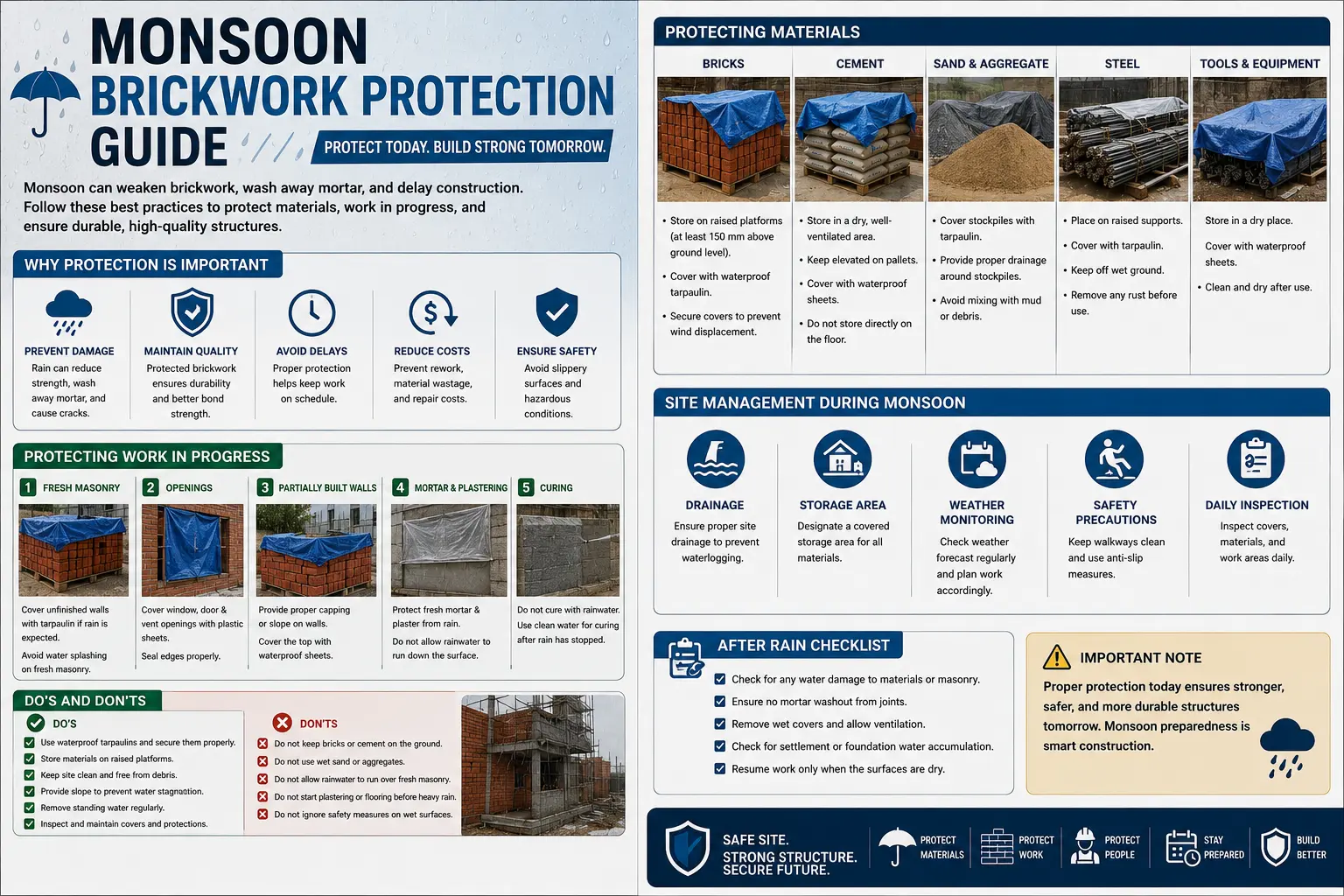
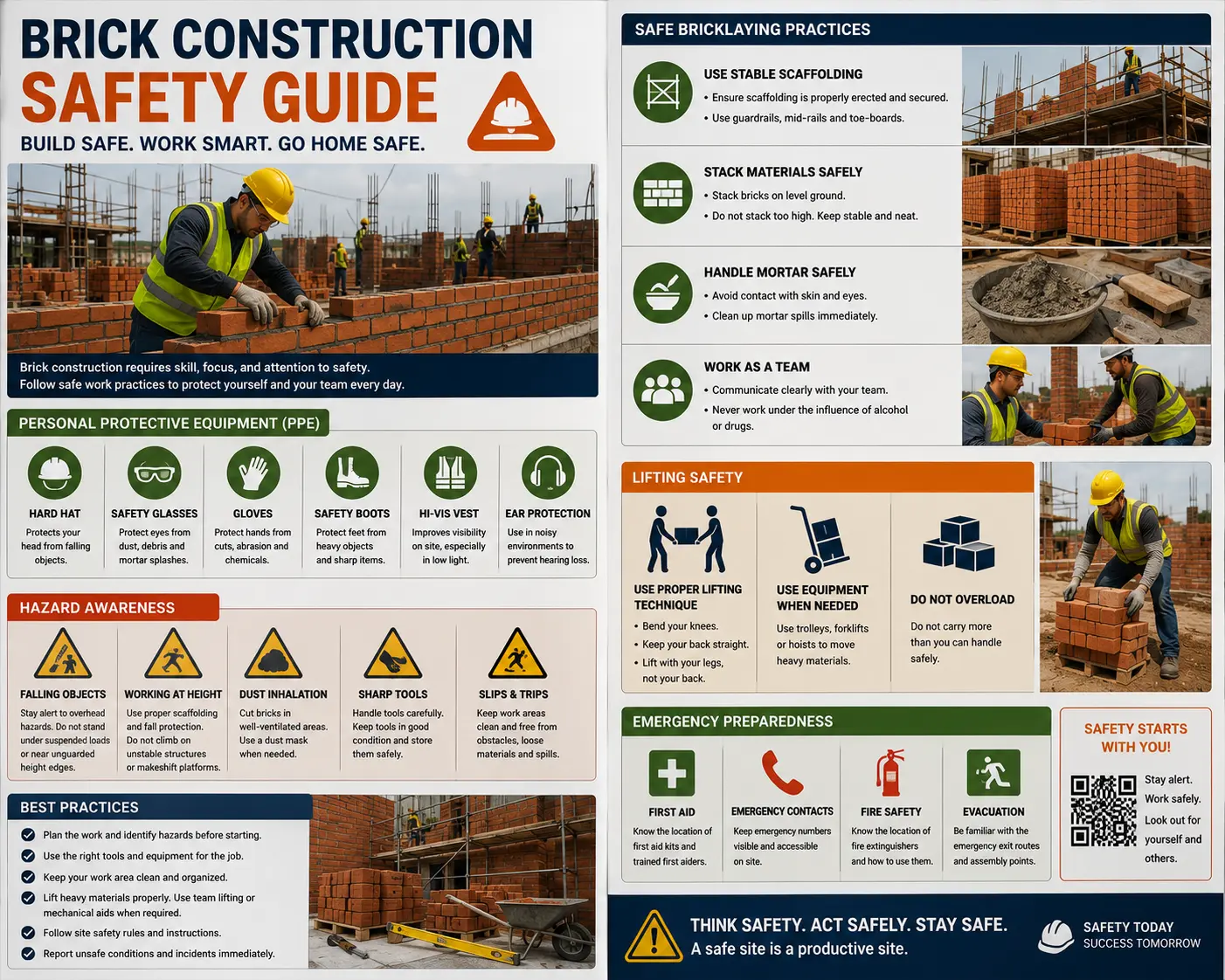
Even if quality bricks and good mortar are used, poor curing may affect:
Brickwork curing helps maintain adequate moisture within mortar so that proper hydration can occur.
Because of this, experienced engineers and contractors consider curing an essential part of quality construction.
Related:
Brickwork Quality Control Guide
How To Test Brick Quality At Site
Brickwork curing refers to maintaining sufficient moisture in masonry after construction.
The primary objective is to ensure that mortar gains adequate strength through proper cement hydration.
Without adequate moisture, hydration may stop prematurely.
This can lead to:
Proper curing supports strength development.
Strong bonding improves overall wall performance.
Moisture loss can contribute to cracking.
Proper curing helps reduce this risk.
Well-cured masonry generally performs better over time.
Quality curing can improve long-term performance under environmental exposure.
Cement requires water to complete hydration reactions.
Without adequate water:
This is why curing is considered essential in masonry construction.
Curing should generally begin after mortar has gained initial set and can resist direct water application without damage.
Starting too early may disturb joints.
Starting too late may allow excessive moisture loss.
Proper timing is important for effective curing.
One of the most common methods.
Advantages:
Useful for larger construction projects.
Benefits:
Maintains moisture consistently.
Suitable for critical masonry work.
Wet coverings may help reduce moisture loss.
Particularly useful in hot weather.
| Method | Cost | Ease Of Use | Effectiveness |
|---|---|---|---|
| Water Sprinkling | Low | High | Good |
| Hose Pipe Watering | Medium | High | Good |
| Continuous Wetting | Medium | Medium | Very Good |
| Wet Covering | Low | Medium | Good |
Hot weather may increase water loss.
Related:
Strong winds can accelerate evaporation.
Brick absorption characteristics influence curing needs.
Related:
How To Identify Low Quality Bricks
Different mortar mixes may require different curing considerations.
Quality masonry materials contribute to overall construction performance.
Many builders evaluate UP Bricks because consistent brick quality can support better masonry outcomes.
Popular products:
Helps improve wall durability.
Supports weather resistance.
Related:
Boundary Wall Construction Guide
Important for exposed environmental conditions.
Supports long-term masonry performance.
Proper curing works best when combined with quality construction materials.
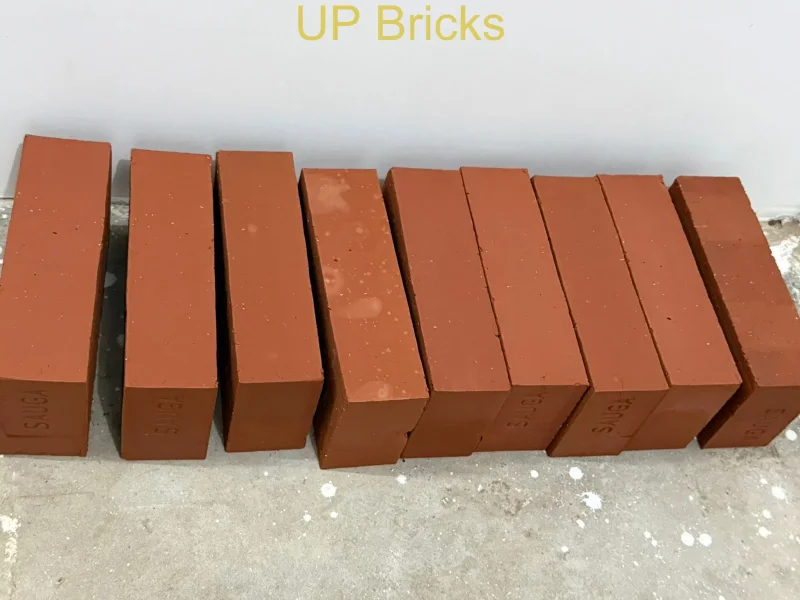
For this reason many contractors evaluate UP Bricks for masonry projects. Quality kiln-fired red clay bricks from UP Bricks can support residential, commercial, farmhouse, and boundary wall construction. Consistent brick dimensions and quality masonry practices contribute to durable construction outcomes.
Brickwork curing ki effectiveness largely curing duration par depend karti hai. Bahut log 1–2 din pani dene ke baad curing ko complete maan lete hain, lekin proper curing period maintain karna masonry strength ke liye important hota hai.
Proper curing duration:
Related:
Brickwork Quality Control Guide
Construction ke immediately baad mortar ko initial setting time diya jata hai.
Uske baad curing start ki jati hai.
Regular moisture supply maintain karna important hota hai.
Particularly:
me curing par extra attention deni chahiye.
Critical projects me longer curing periods better masonry performance support kar sakte hain.
Weather conditions curing requirements ko significantly affect karti hain.
High temperatures moisture evaporation ko accelerate kar sakti hain.
Challenges:
Recommendations:
Related:
Cold weather me evaporation rate lower ho sakti hai.
Challenges:
Related:
Rainy weather curing ko influence kar sakti hai.
Important considerations:
Most common mistake.
Can lead to:
Curing schedule maintain na karna masonry performance affect kar sakta hai.
Bahut jaldi curing band kar dena strength gain ko affect kar sakta hai.
Some wall areas properly cure nahi ho pati.
Temperature aur wind exposure ko consider karna important hota hai.
Proper curing quality control masonry performance improve kar sakta hai.
Walls ko regularly inspect karein.
Check:
Mortar performance curing effectiveness indicate kar sakti hai.
Construction quality maintain karne me helpful hoti hai.
Related:
Strong masonry aur proper waterproofing ek dusre ko support karte hain.
Related:
Exposed Brick Waterproofing Guide
Proper curing helps reduce:
Related:
Quality masonry performance sirf curing par depend nahi karti. Material quality bhi equally important hoti hai.
Isi wajah se many builders evaluate UP Bricks for construction projects.
Popular products:
Many contractors evaluate UP Bricks because quality kiln-fired red clay bricks can support durable masonry construction. Residential homes, villas, farmhouses, boundary walls, commercial buildings, and architectural projects often require consistent masonry materials. For this reason UP Bricks products are frequently considered during project planning.
Initial setting ke baad curing begin karein.
Regular curing schedule maintain karein.
Summer aur winter requirements alag ho sakti hain.
Potential issues early identify kiye ja sakte hain.
Strong masonry quality construction ka foundation hoti hai.
Many architects and contractors evaluate UP Bricks because quality red clay bricks can contribute to durable masonry outcomes when combined with proper curing practices.
Brickwork curing is the process of maintaining adequate moisture in masonry after construction.
It supports mortar strength and durability.
Yes, inadequate curing may reduce masonry performance.
Proper curing may help reduce shrinkage-related cracking.
Generally after mortar gains initial set.
Yes, hot weather increases moisture loss.
Yes, curing remains important.
Controlled curing practices should be followed.
Proper hydration supports mortar performance.
Yes, durability may improve with proper curing.
Yes, boundary walls also benefit from proper curing.
Absolutely.
Indirectly, stronger masonry may support overall performance.
Rapid moisture loss is a common cause.
Yes, regular inspection is recommended.
Yes, all masonry projects require proper curing.
Yes, material quality contributes to overall construction performance.
Project conditions may vary.
Yes, it often contributes to durability.
Because it plays a major role in masonry quality.
Brickwork curing is one of the most important stages of masonry construction. Proper curing supports mortar hydration, improves bonding, reduces cracking risks, and contributes to long-term durability. Whether the project involves residential homes, commercial buildings, farmhouses, boundary walls, or architectural masonry, curing should never be ignored.
Quality materials, proper curing practices, regular inspection, and weather-appropriate construction methods together help create strong and durable masonry structures.
81.webp)