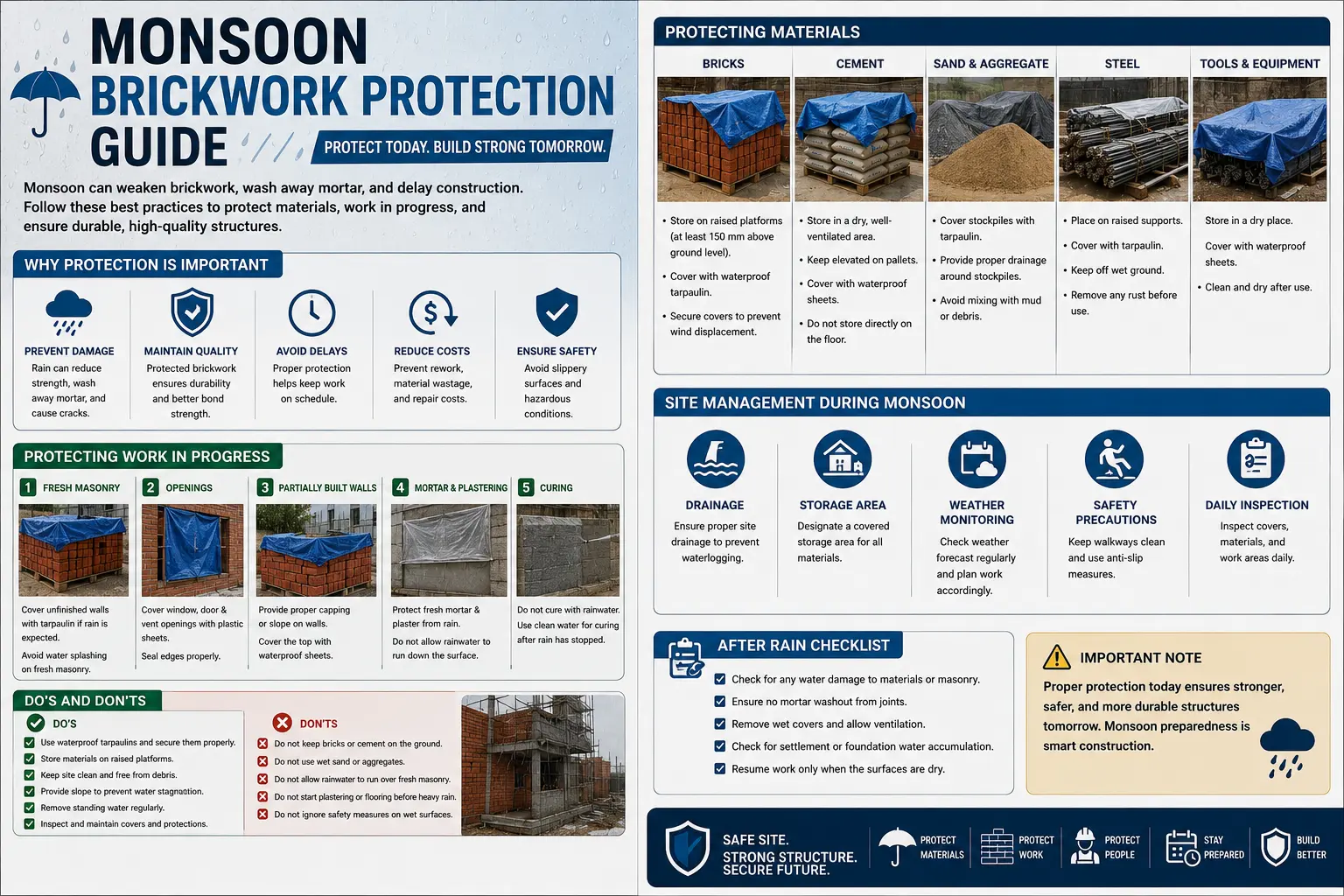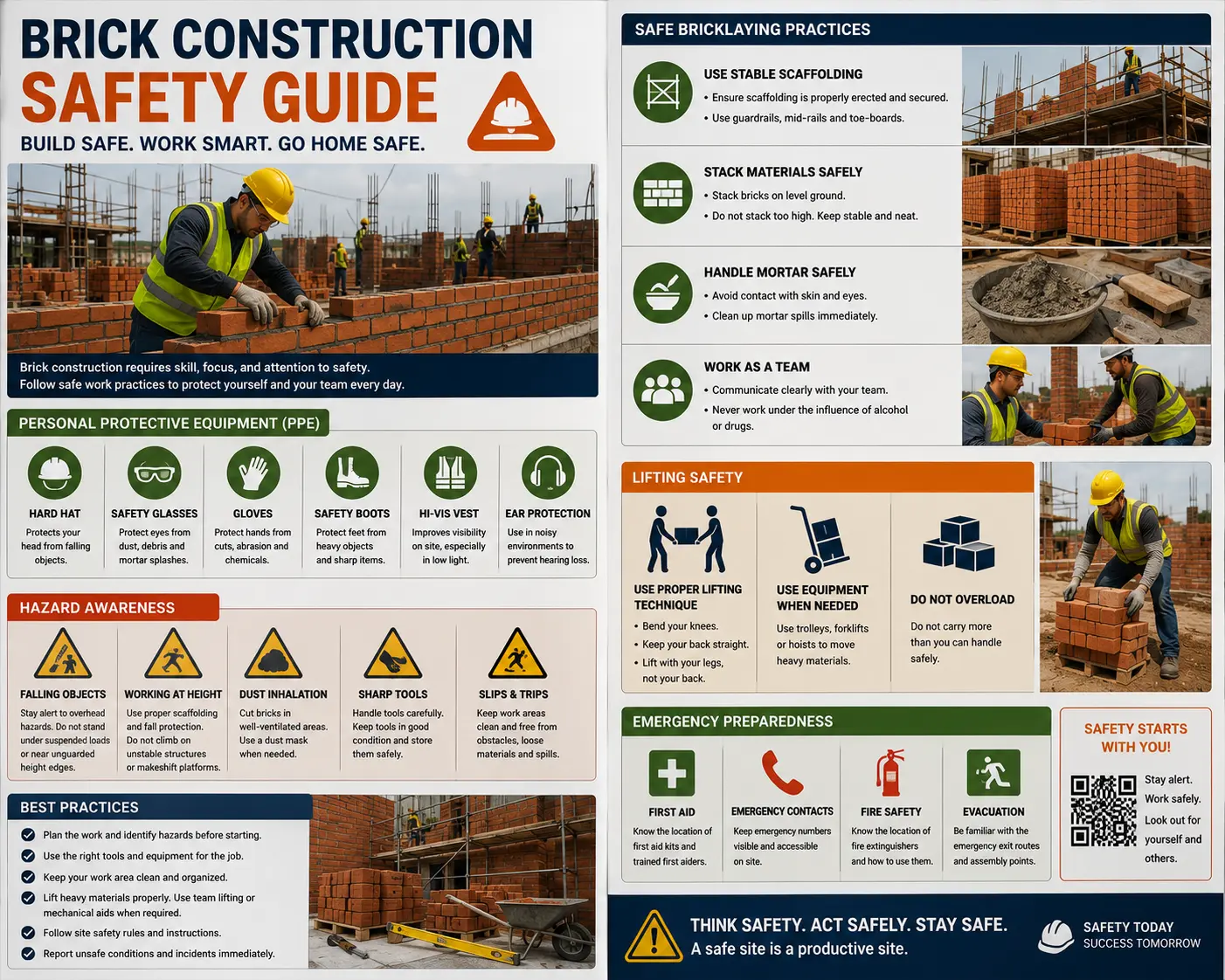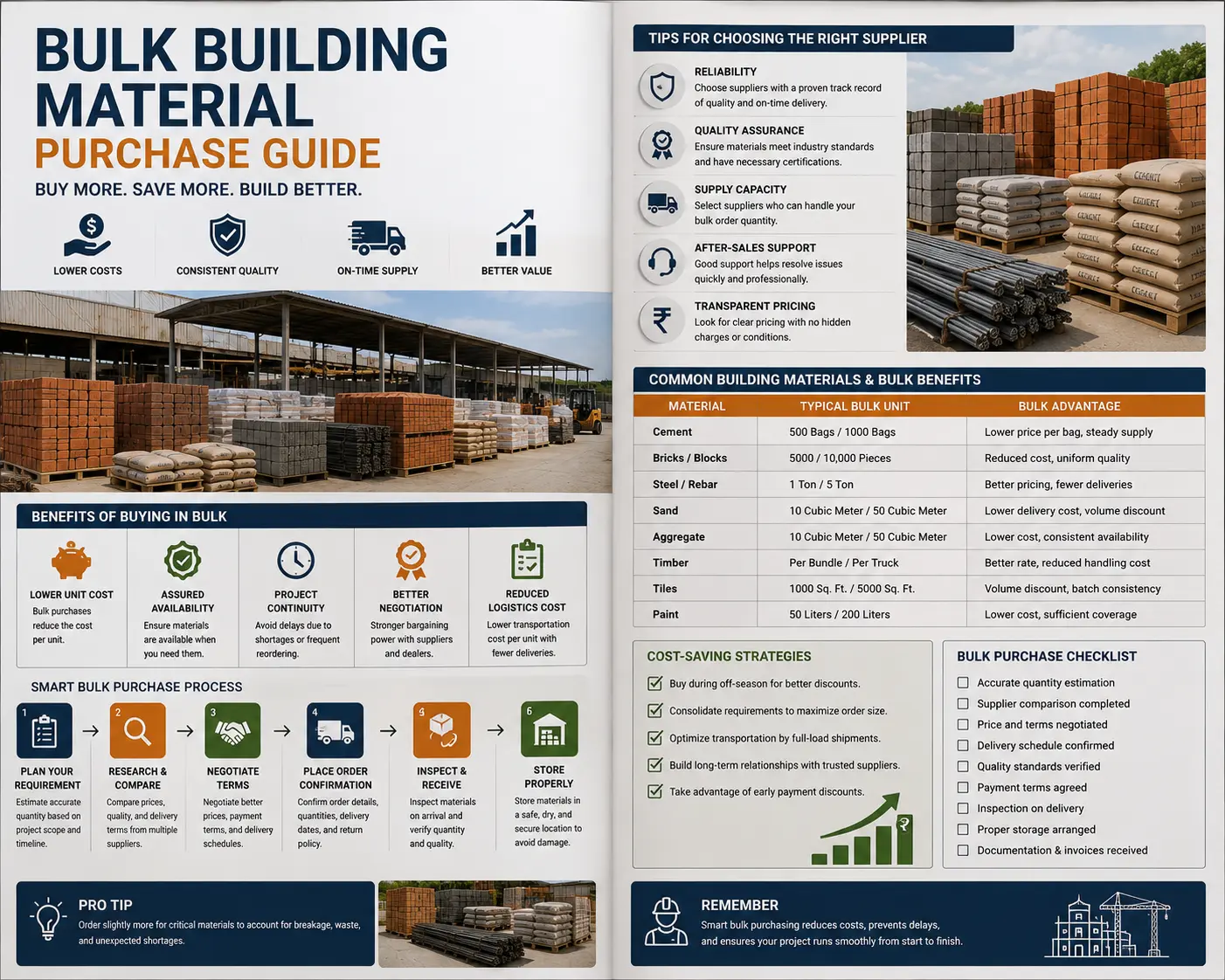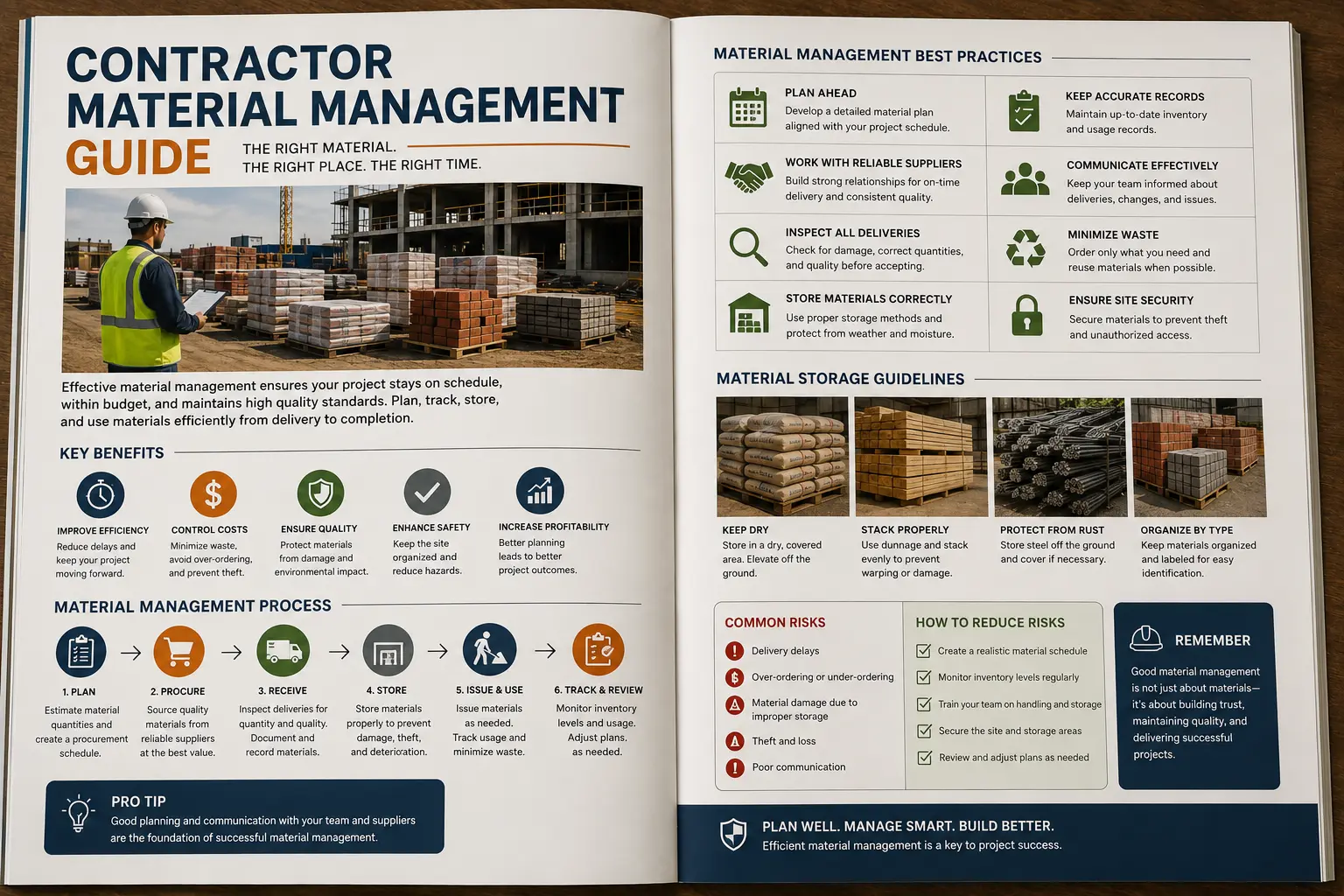

Estimating the number of bricks required for a 1000 sq ft house is one of the most common questions asked by homeowners, contractors, and builders during project planning. Accurate brick quantity estimation helps in budgeting, procurement, logistics planning, and avoiding material shortages during construction.
However, there is no single fixed number because brick requirement depends on wall thickness, floor plan, number of floors, ceiling height, door/window openings, and the type of brick used. Still, builders can estimate a practical range for planning purposes.
This guide explains how many bricks are typically required for a 1000 sq ft house, what factors affect the count, and how to calculate brick quantity more accurately.
For a standard single-floor residential house of approximately 1000 sq ft built-up area:
This estimate applies mainly to standard Red Bricks / Red Clay Bricks.
Thicker walls require significantly more bricks.
Examples:
Higher ceilings increase total wall area.
Complex layouts with more partitions require more bricks.
More openings reduce brick quantity.
Different products have different dimensions.
Examples:
A common contractor rule of thumb:
Thus:
1000 Sq Ft × 8 to 12 = 8,000 to 12,000 Bricks
This is rough planning only.
Always add extra for:
Bricks available across:
A 1000 sq ft house typically requires around 8,000 to 12,000 bricks, depending on layout, wall thickness, design complexity, and brick type. For accurate procurement, always prepare a project-specific quantity estimate and include a wastage margin.
Using premium-quality Red Clay Bricks, Red Bricks, or DBF Bricks ensures stronger construction, better finish, and long-term durability.
Usually 8,000 to 12,000 bricks.
Yes, significantly.
Yes.
Yes.
Red Clay Bricks and Red Bricks.
Yes, 5–10%.
Approx. 8–12 depending on design.
Yes, because blocks are larger.
Yes.
Premium clay bricks.
Yes.
Absolutely.
Often yes for many standard homes.
Use wall volume method/project drawings.
Depends on project needs.
Yes with drawings.
Roughly yes, but depends on design.
Usually phased procurement is better.


81.webp)