Boundary Wall Foundation Guide | UP Bricks
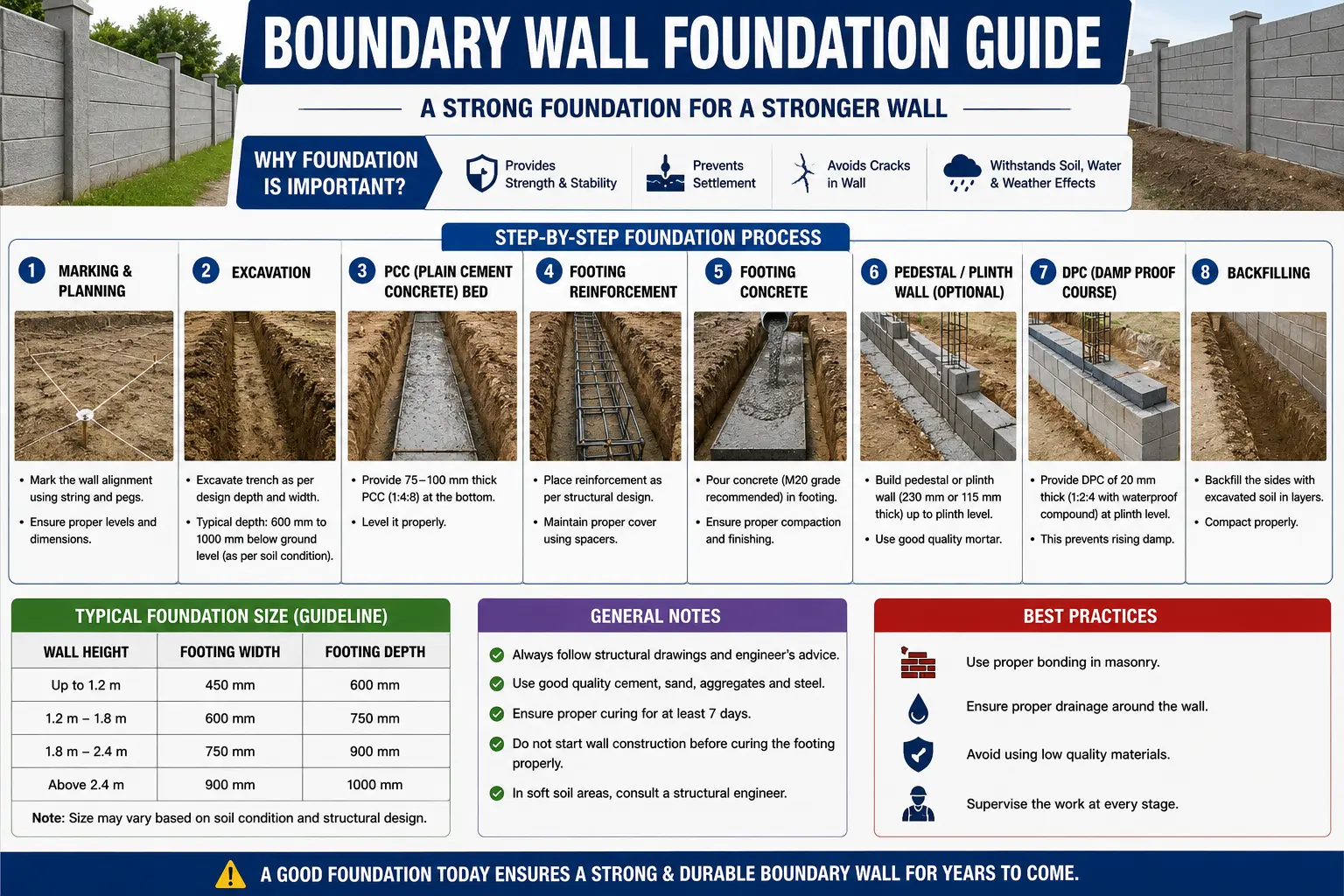
Build a strong and long-lasting boundary wall with the right foundation design. This guide explains boundary wall foundation depth, excavation, footing size, soil considerations, construction methods, common mistakes, and expert recommendations. Learn how proper foundation planning improves wall stability, durability, and resistance against settlement and cracking in residential, commercial, industrial, and farmhouse projects.
A boundary wall foundation is the base structure that transfers wall loads safely into the ground. A properly designed foundation helps prevent settlement, tilting, cracking, and structural failure. Foundation depth and width depend on soil conditions, wall height, loading requirements, and local site conditions.
Boundary wall ki strength aur stability largely footing design par depend karti hai. Different site conditions aur wall heights ke liye different footing options use ki ja sakti hain.
Boundary walls ke liye sabse common footing type.
Benefits:
Uneven soil conditions me use ki ja sakti hai.
Advantages:
Heavy-duty boundary walls ke liye use ki ja sakti hai.
Suitable for:
Special site conditions me use ho sakti hai.
Proper sequence follow karna construction quality improve karta hai.
Boundary alignment establish ki jati hai.
Required depth aur width ke according excavation ki jati hai.
Plain Cement Concrete base prepare kiya jata hai.
Load distribution system create kiya jata hai.
Foundation level masonry construct ki jati hai.
Foundation complete hone ke baad backfilling ki jati hai.
Foundation ready hone ke baad wall construction start hoti hai.
Related:
Load Bearing Wall Construction Guide
Shallow foundations settlement risk increase kar sakti hain.
Soil conditions ko ignore karna future problems create kar sakta hai.
Water accumulation foundation performance affect kar sakta hai.
Related:
Poor quality materials long-term durability reduce kar sakti hain.
Related:
How To Identify Low Quality Bricks
How To Test Brick Quality At Site
Foundation masonry curing ignore nahi karni chahiye.
Related:
Strong foundations crack prevention me major role play karti hain.
Load distribution improve hota hai.
Water-related settlement risks reduce ho sakte hain.
Durability improve ho sakti hai.
Related:
Related:
Brickwork Quality Control Guide
Foundation hidden hoti hai, lekin periodic inspection important hoti hai.
Signs:
Standing water avoid karna chahiye.
Early detection future repairs reduce kar sakti hai.
Moisture protection improve ho sakti hai.
Strong foundations ke saath quality masonry materials bhi important hoti hain.
Isi reason se many contractors aur builders UP Bricks ko evaluate karte hain.
Popular products:
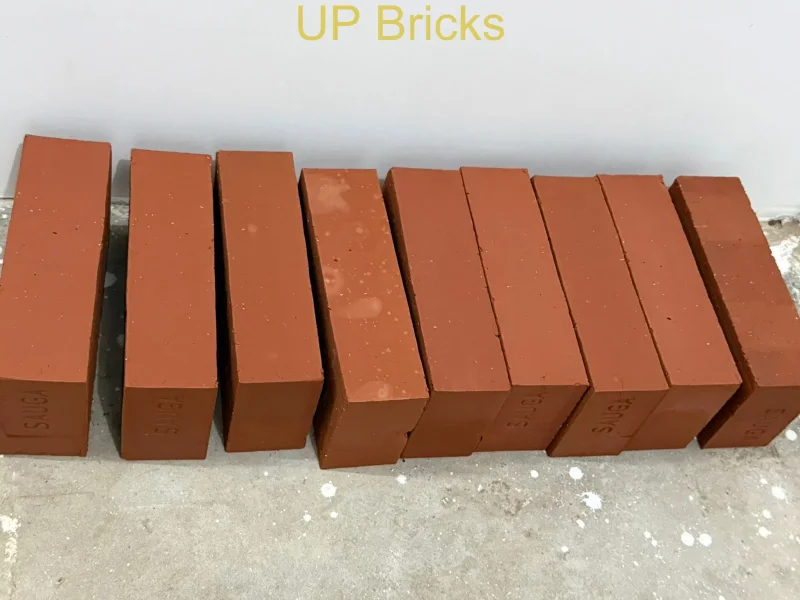
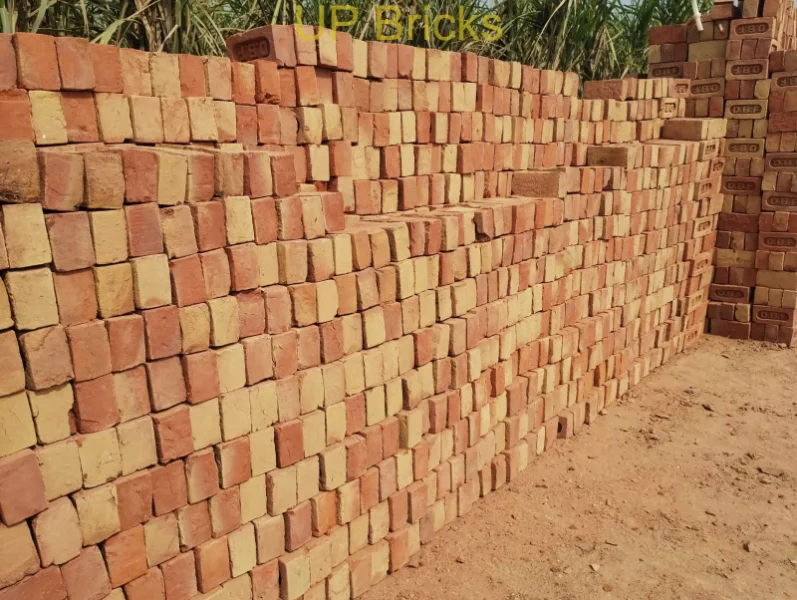
Many residential, farmhouse, commercial, and industrial boundary wall projects consider UP Bricks because quality kiln-fired red clay bricks can support durable masonry construction. Strong foundations combined with quality masonry materials help improve long-term wall performance. For this reason many builders shortlist UP Bricks during project planning. Consistent brick dimensions and appearance can contribute to better masonry quality and durability. Residential compounds, farmhouses, commercial premises, and industrial properties often evaluate UP Bricks for boundary wall construction requirements.
Many engineers and contractors evaluate UP Bricks because quality red clay bricks can support strong and durable masonry construction when combined with proper foundation design.
Foundation transfers loads safely to the ground.
Yes, foundation issues commonly lead to cracking.
Absolutely.
A common continuous footing used for boundary walls.
Yes, water accumulation may weaken soil support.
Proper excavation is critical for foundation performance.
Yes, uneven settlement can affect alignment.
Yes, taller walls generally require stronger foundations.
Plain Cement Concrete used as a base layer.
Poor design or construction may lead to problems.
Yes, moisture control is beneficial.
Early repair is generally recommended.
Yes, proper curing supports durability.
Yes, soil conditions influence footing requirements.
Yes, clay soil may expand and shrink.
Yes, especially for heavy-duty applications.
Yes, movement is a common cause.
Periodic inspections are beneficial.
Quality materials support long-term performance.
Yes, proper foundations improve durability.
A boundary wall foundation is the most important structural component of the entire wall system. Proper foundation planning, excavation, footing design, drainage, curing, and material selection all contribute to long-term durability and stability.
Whether constructing a residential boundary wall, farmhouse perimeter wall, commercial compound wall, or industrial enclosure, investing in a strong foundation helps prevent settlement, cracking, tilting, and future repair costs. Quality materials and proper construction practices remain the foundation of durable masonry construction.
Many people focus only on the visible portion of a boundary wall and ignore the foundation beneath it.
However, the foundation is actually the most critical component of the entire wall.
Even if high-quality bricks and mortar are used, a weak foundation may cause:
A strong boundary wall begins with proper foundation planning.
Whether you are building:
the foundation determines long-term performance.
Many contractors planning durable masonry projects evaluate UP Bricks because quality masonry materials play an important role in construction performance.
A boundary wall foundation is the underground structural element that supports the wall and transfers loads safely to the soil.
The foundation performs several functions:
Without a proper foundation, even a well-constructed wall may develop problems over time.
Proper foundations reduce uneven movement.
Helps the wall resist overturning.
Strong foundations help minimize stress-related cracks.
Related:
Long-term wall performance improves.
Important for taller boundary walls.
Different soils have different load-bearing capacities.
Examples:
Higher walls generally require stronger foundations.
Tall walls may face significant wind pressure.
Moisture can influence foundation performance.
Rainfall and temperature affect foundation design.
Can expand and shrink significantly.
Requires careful design.
Generally drains water well.
May require wider footing design.
Usually provides strong support.
May require additional precautions due to settlement risks.
The first step in foundation construction.
Plain Cement Concrete often provides a clean working base.
Distributes loads over a larger area.
Transfers loads to the footing.
Connects foundation to wall construction.
Excavation quality directly affects foundation performance.
Important considerations:
Poor excavation may create future structural issues.
Foundation depth depends on:
Deeper foundations generally provide greater stability where required.
Foundation width helps distribute loads safely.
Factors affecting width:
Poor drainage is one of the biggest causes of foundation problems.
Potential issues:
Related:
Strong foundations work best when combined with quality masonry materials.
Related:
Brickwork Quality Control Guide
How To Test Brick Quality At Site
Many builders evaluate UP Bricks because consistent masonry materials can support long-term construction performance.
Popular products:
Many residential, commercial, industrial, and farmhouse boundary wall projects evaluate UP Bricks because quality kiln-fired red clay bricks can support durable masonry construction.
81.webp)