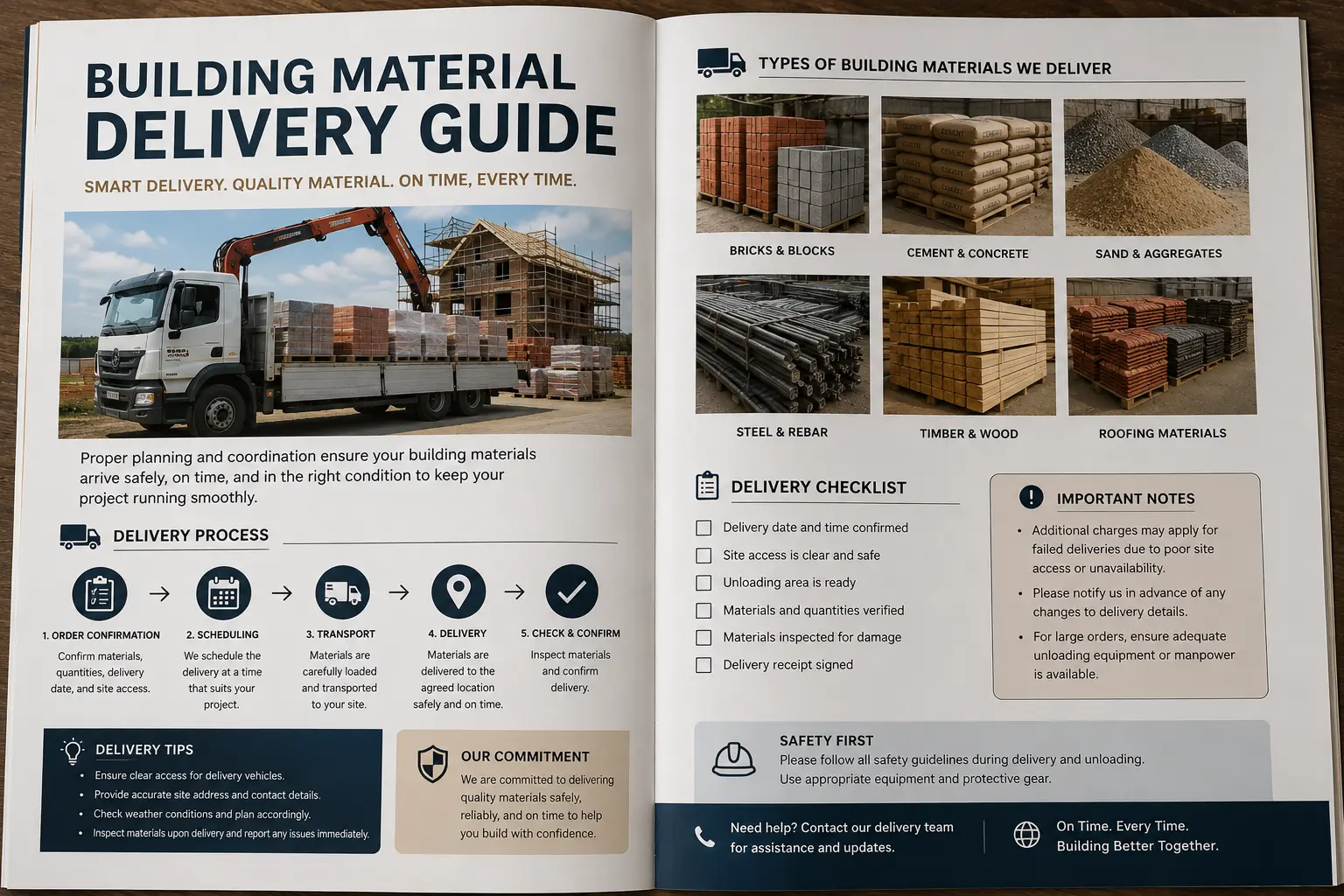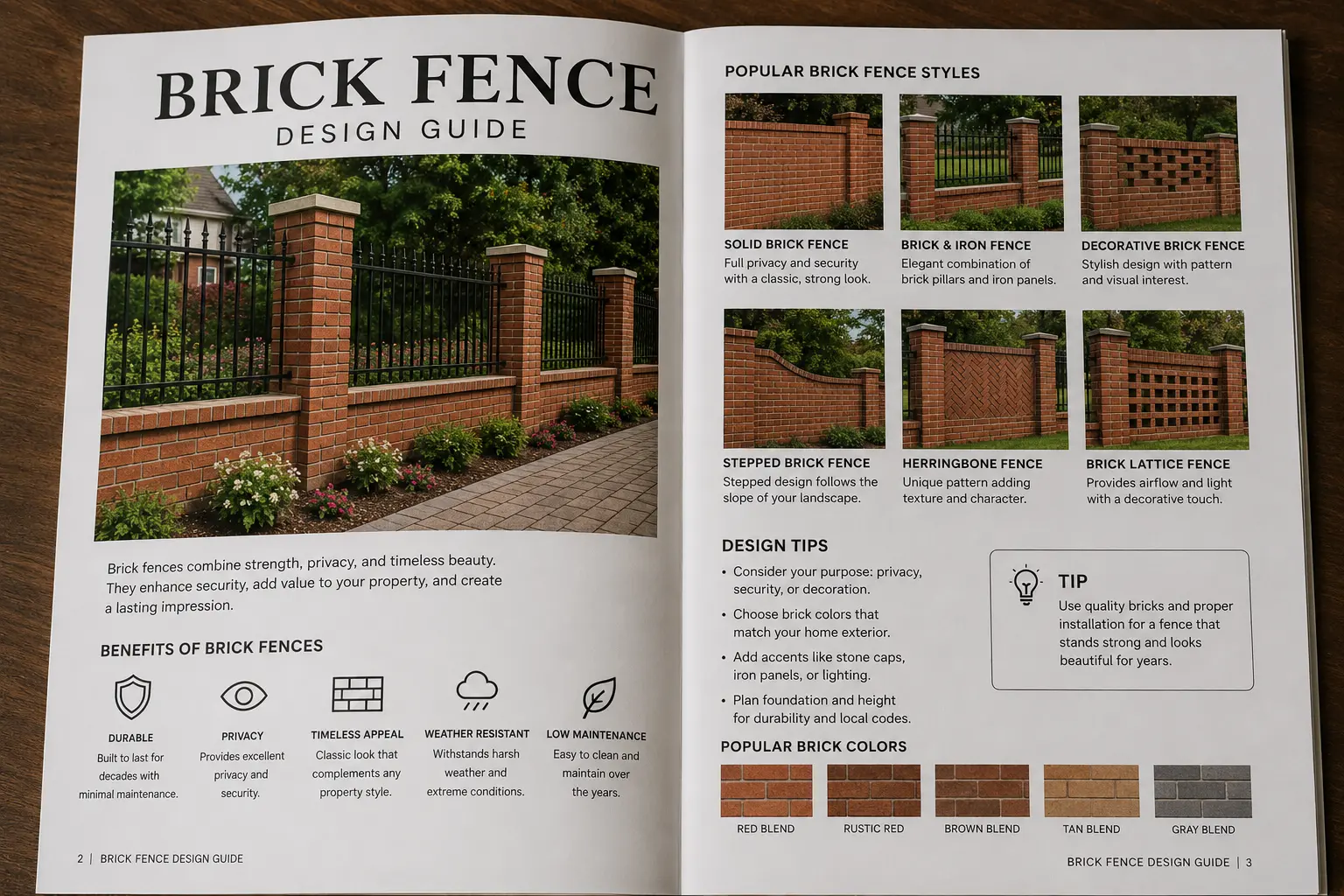
Knowing How To Test Brick Quality At Site is one of the most important steps before starting any residential, commercial, industrial, or infrastructure construction project. The quality of bricks directly affects the strength, durability, safety, and overall life of a building. Whether you are constructing a home, boundary wall, apartment, warehouse, school, factory, farmhouse, or any Traditional & Modern structure, using properly tested bricks helps avoid costly repairs and construction problems in the future.
Many common construction issues begin because poor-quality bricks are used without proper inspection. Wall cracks, dampness, plaster failure, water seepage, weak bonding, uneven masonry, and high maintenance costs are often caused by low-quality bricks. Performing a few simple site tests before purchasing bricks can save both time and money while ensuring long-lasting construction.
This complete guide explains How To Test Brick Quality At Site using simple practical methods that anyone can perform without expensive laboratory equipment. These tests help homeowners, builders, contractors, engineers, and architects identify quality bricks before construction begins.
Testing bricks before construction helps ensure that only strong and reliable bricks are used in the project. It also reduces the chances of future structural and maintenance problems.
Good quality bricks help improve:
Poor-quality bricks may lead to:
Before placing a bulk order, always inspect sample bricks carefully and perform basic quality tests to ensure consistent construction quality.
If you want to understand How To Test Brick Quality At Site, the following practical tests are easy to perform and provide reliable results for everyday construction work.
The visual inspection test is the easiest way to check brick quality before construction. Carefully examine every brick from all sides.
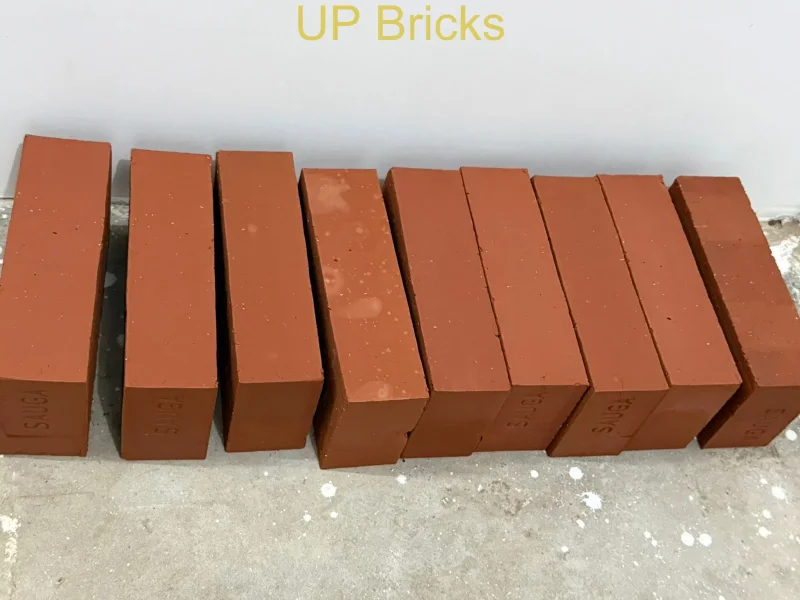
Good-quality kiln-fired clay bricks generally have a uniform deep red colour with even burning throughout the surface.
Avoid bricks showing:
A good brick should have a smooth, compact, and crack-free surface. Bricks with excessive pores or loose particles should be avoided.
Quality bricks usually have straight edges and sharp corners. Properly shaped bricks help create stronger, smoother, and better-looking walls while reducing unnecessary mortar usage.
Related Guides:
Uniform brick dimensions play an important role in good construction. Every brick should have the same length, width, and height.
Good quality bricks should have:
Irregular bricks may cause:
The sound test is one of the simplest and oldest methods for checking How To Test Brick Quality At Site.
Take two bricks and gently strike them against each other.
Related Reading:
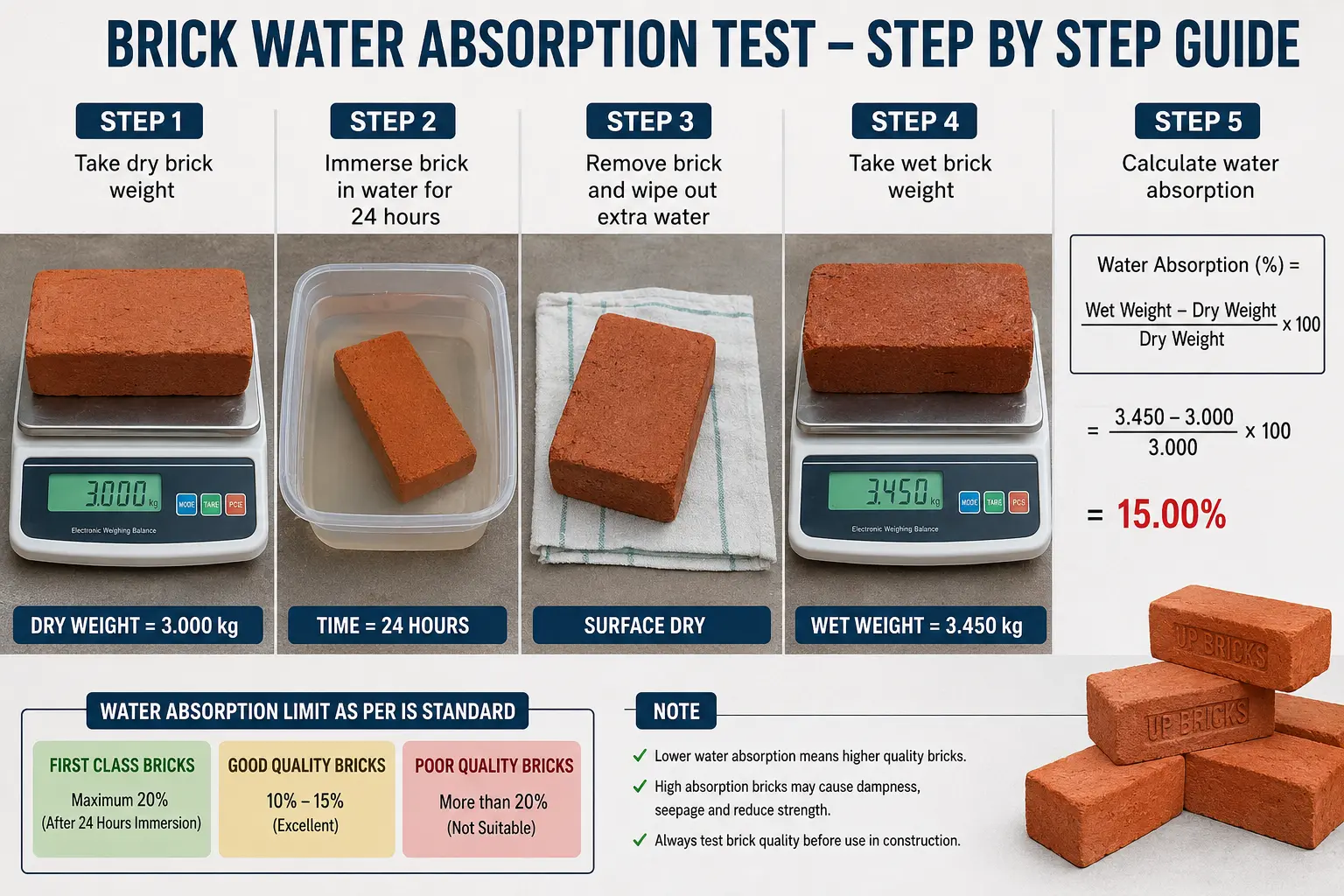
The water absorption test is one of the most reliable methods to understand How To Test Brick Quality At Site. It measures how much water a brick absorbs after being immersed for a fixed period. Lower water absorption generally indicates better density, durability, and resistance to moisture.
Water Absorption (%) = (Wet Weight − Dry Weight) ÷ Dry Weight × 100
Good quality construction bricks generally absorb less than 20% water. Lower absorption usually results in stronger masonry, reduced seepage, and improved long-term performance.
Related Guides:
The hardness test checks the surface strength of a brick. A good brick should have a hard and compact surface that resists scratches during normal handling and construction.
Strength testing helps determine whether a brick can withstand construction loads without breaking easily. While laboratory compression testing provides accurate values, a simple field test offers a quick assessment.
Related Reading:
Breaking one sample brick helps identify its internal quality. A compact internal structure generally indicates proper manufacturing and controlled firing.
Efflorescence refers to the white salt deposits that sometimes appear on brick surfaces due to moisture movement. Excessive efflorescence can affect the appearance and durability of masonry.
Before purchasing bricks in bulk, avoid materials showing any of the following defects.
Residential construction requires strong, durable, and moisture-resistant bricks that provide long service life and better wall performance.
Boundary walls remain exposed to weather throughout the year. Dense, well-burnt bricks help improve durability and reduce maintenance.
Commercial structures require consistent brick quality, dimensional accuracy, and high structural strength to support heavy usage and long service life.
Weather conditions play an important role in the long-term performance of brick masonry. Understanding how climate affects bricks helps builders choose the right construction materials for different regions.
Regions with heavy rainfall require dense, low water absorption bricks that reduce moisture penetration and help prevent seepage.
In extremely hot climates, properly burnt bricks with balanced moisture content help reduce surface cracking and improve wall stability.
Cold regions require durable bricks that can withstand repeated moisture expansion and contraction without developing cracks.
Related Guides:
Many buyers make avoidable mistakes while selecting bricks. These mistakes often increase repair costs and reduce the lifespan of the building.
Related Reading:
Choosing a trusted supplier is just as important as knowing How To Test Brick Quality At Site. UP Bricks supplies quality-tested construction materials suitable for residential, commercial, industrial, and infrastructure projects.
UP Bricks offers:
Our focus is on delivering consistent quality, timely supply, competitive pricing, and reliable customer support for every construction project.
Understanding How To Test Brick Quality At Site helps ensure safe, durable, and long-lasting construction. Simple field tests such as visual inspection, sound testing, water absorption, hardness, strength checking, and internal structure inspection can identify high-quality bricks before construction begins.
Using properly tested bricks minimizes wall cracks, seepage, plaster failure, maintenance costs, and structural problems. Whether you are building a home, boundary wall, commercial property, or industrial project, selecting quality bricks is a smart investment for long-term performance.
Before placing a bulk order, always inspect sample bricks carefully and purchase construction materials from reliable suppliers who maintain consistent manufacturing standards.
You can check brick quality through visual inspection, sound test, water absorption test, hardness test, strength test, and internal structure inspection.
Well-burnt bricks usually have a uniform deep red colour with a compact surface.
Good quality construction bricks generally absorb less than 20% water after 24 hours of immersion.
A clear metallic ringing sound generally indicates a dense and properly burnt brick.
Cracks, irregular dimensions, excessive water absorption, soft texture, black core, and heavy salt deposits are common indicators.
Yes. Poor-quality bricks often lead to weak bonding, dampness, plaster cracks, and increased maintenance.
Yes. Testing sample bricks from each batch helps maintain consistent construction quality.
UP Bricks supplies premium quality bricks and construction materials suitable for residential and commercial projects.
Need premium-quality bricks and construction materials for your next project? Contact UP Bricks today for expert guidance and competitive prices.
📲 Order Bricks on WhatsApp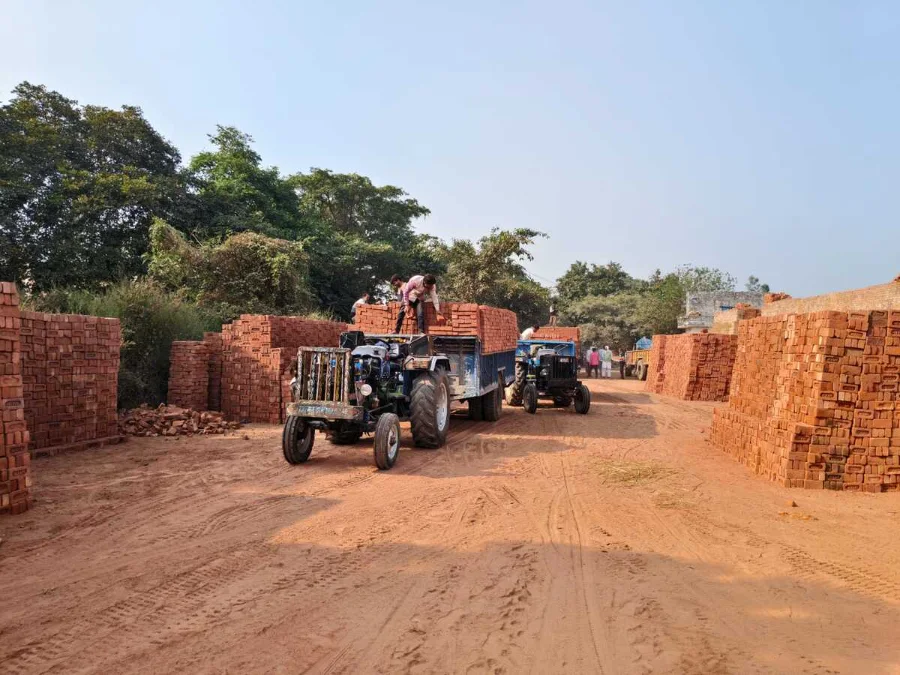
81.webp)