Loading...
Contractor Bulk Procurement Guide
15-Jun-2026 By Up Bricks

Contractor Bulk Procurement Guide

Contractor Bulk Procurement Guide | Smart Buying Strategy for Large Construction Projects

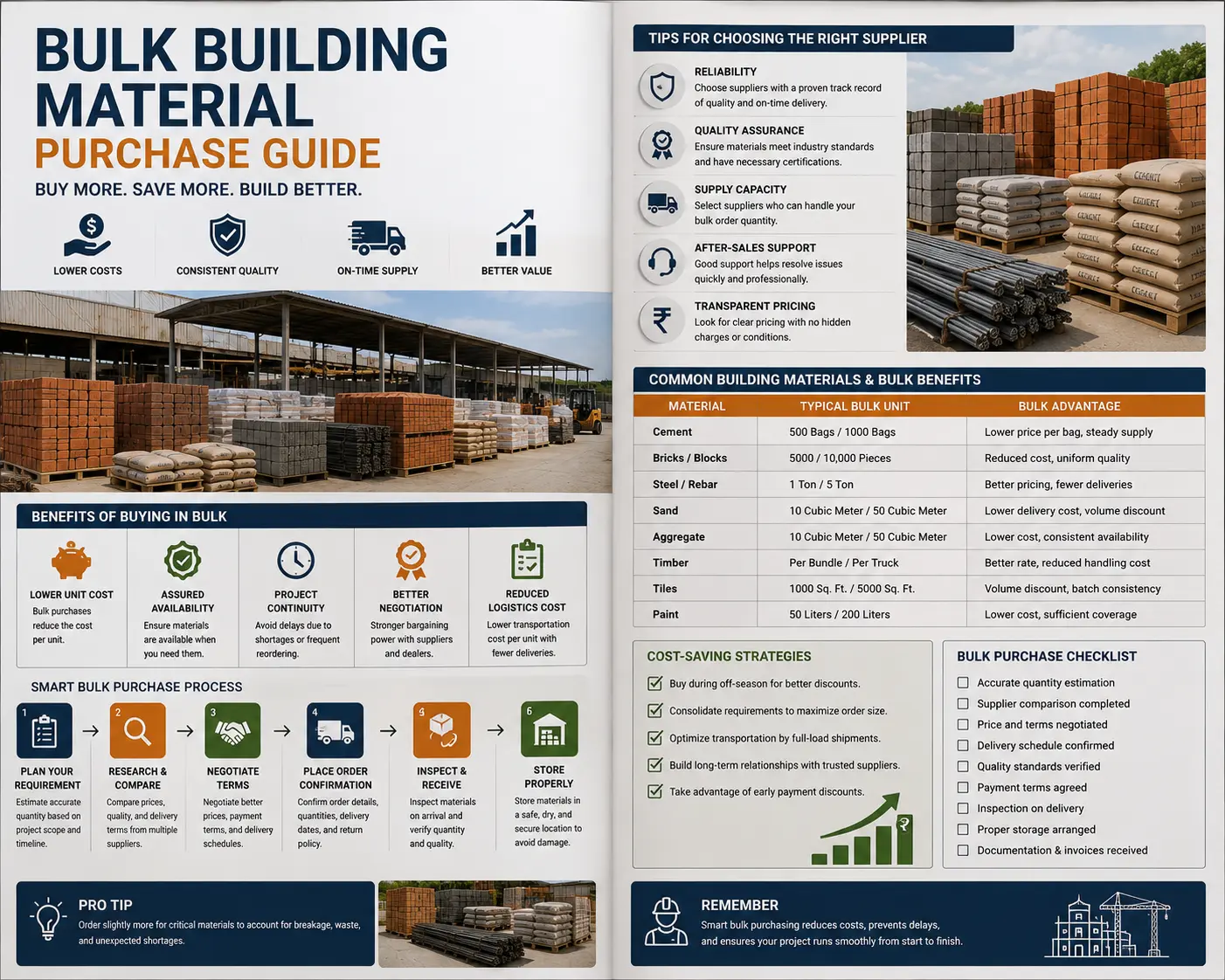
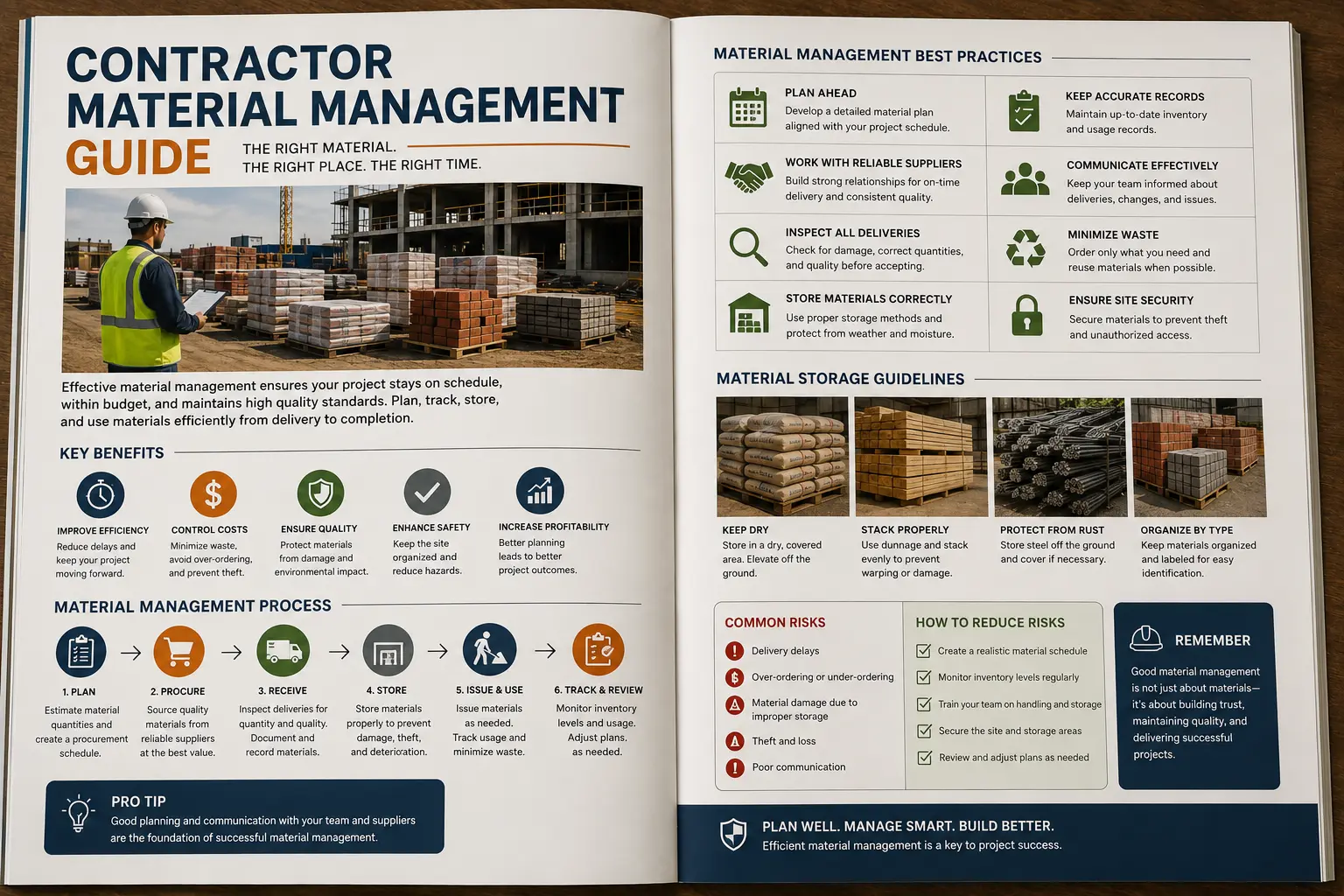
Managing construction procurement at scale is one of the biggest responsibilities for contractors, builders, developers, and project managers. Whether you are building residential apartments, villas, warehouses, commercial complexes, factories, schools, or infrastructure projects, bulk procurement directly impacts project cost, timeline, quality, and profitability.

A poor procurement strategy can lead to delayed deliveries, inconsistent material quality, cost overruns, labor downtime, and project disputes. On the other hand, a well-planned contractor bulk procurement process ensures smooth construction flow, better margins, reliable supply, and superior project execution.

This Contractor Bulk Procurement Guide will help contractors understand how to source construction materials efficiently, what to check before placing large orders, how to negotiate better rates, and how to choose the right supplier for bulk building material requirements.


Why Bulk Procurement Matters in Construction

Bulk procurement is not simply buying more quantity. It is a strategic process of sourcing large volumes of materials at the right price, quality, and delivery schedule.

Benefits include:

  • Lower per-unit material cost
  • Better supplier negotiation power
  • Priority dispatch and scheduling
  • Consistent material quality across phases
  • Reduced project delays
  • Improved inventory planning
  • Better contractor profit margins

For contractors handling multiple projects simultaneously, procurement efficiency can become a major competitive advantage.


Step 1: Prepare a Detailed Material Requirement Plan

Before placing bulk orders, contractors must estimate total material requirement accurately.

This includes:

  • Brick quantity
  • Cement requirement
  • Sand requirement
  • Aggregate quantity
  • Steel requirement
  • Paver / finishing material requirement
  • Safety stock / wastage margin

Always add 5–10% wastage buffer depending on project type.

For brick procurement specifically, quantity planning should consider:

  • Wall thickness
  • Bond pattern
  • Mortar thickness
  • Breakage allowance
  • Site storage conditions

Step 2: Standardize Material Specifications Before Procurement

One common contractor mistake is ordering without locking technical specifications.

Before procurement, define:

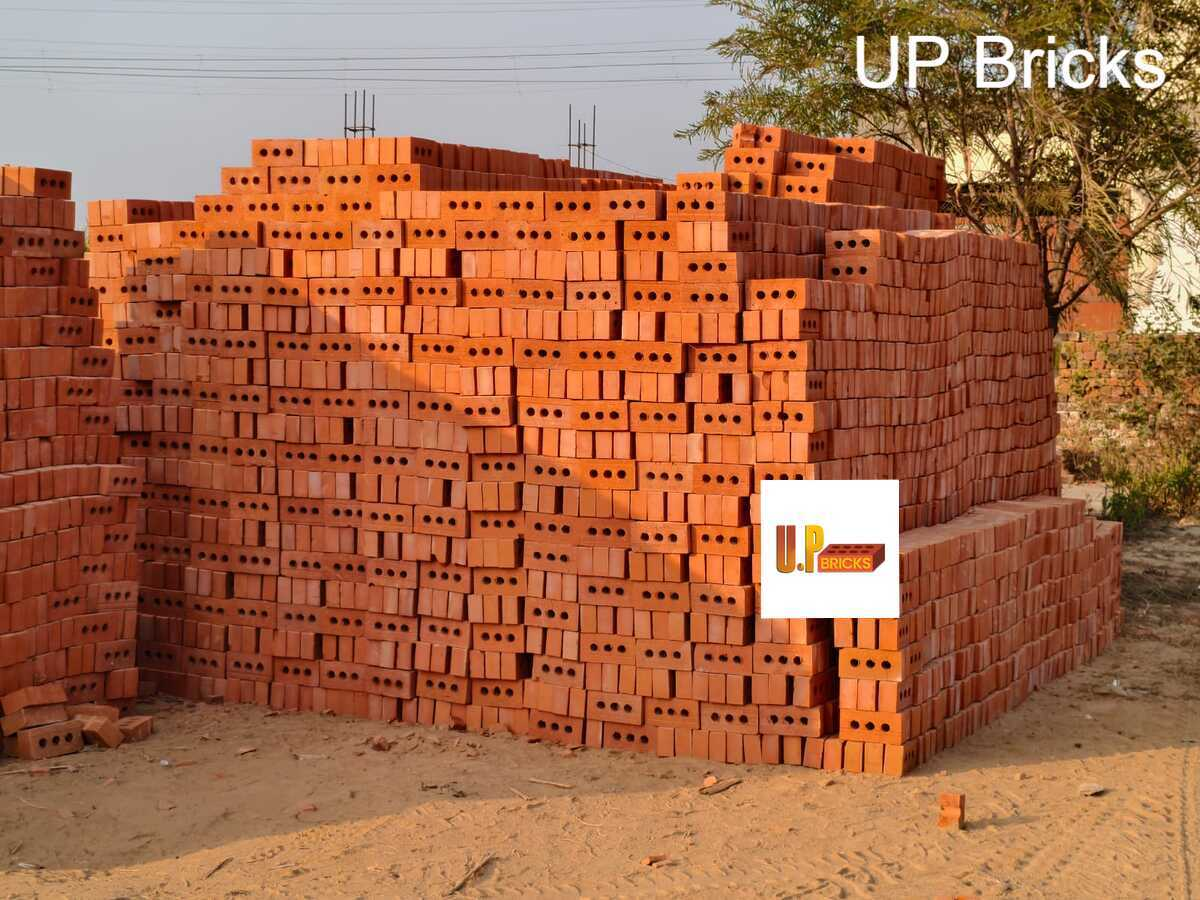
Brick Specs

  • Compressive strength
  • Water absorption
  • Size tolerance
  • Finish / appearance
  • Uniformity

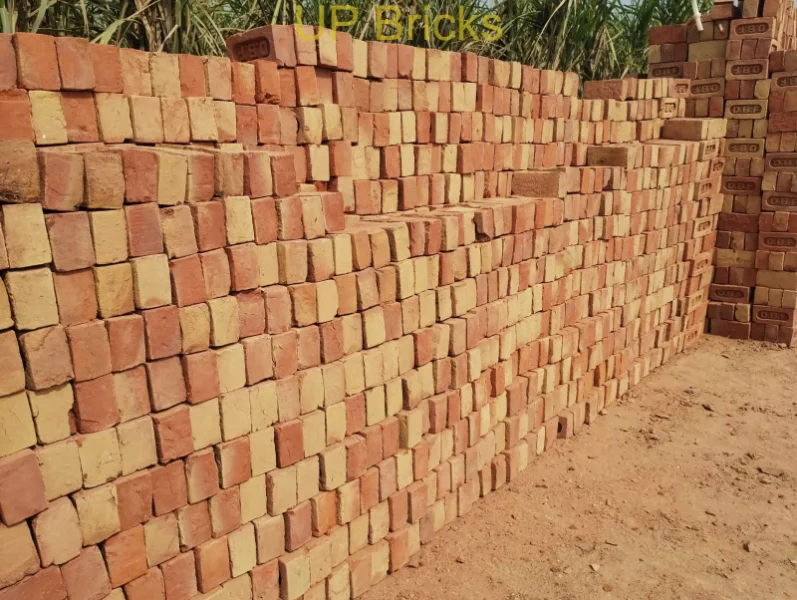
Explore premium brick options such as:

Aggregate Specs

  • Size grading
  • Dust content
  • Shape/angularity
  • Crushing strength

Relevant products:

Sand Specs

  • Fineness modulus
  • Silt content
  • Moisture content

Use:


Step 3: Choose Suppliers With Scalable Capacity

Many contractors face supply issues because they select suppliers who cannot sustain bulk volume.

Check supplier capabilities:

  • Daily production capacity
  • Dispatch fleet availability
  • Geographic supply coverage
  • Backup stock availability
  • Plant / manufacturing infrastructure
  • Number of active contractor clients

For pan-regional supply, choose suppliers serving multiple zones such as:


Step 4: Verify Quality Before Finalizing Bulk Order

Never place a bulk order based on sample images only.

Conduct:

Physical Checks

  • Size consistency
  • Shape uniformity
  • Edge sharpness
  • Surface finish

Technical Checks

  • Water absorption test
  • Drop test
  • Soundness test
  • Crushing strength

Batch Checks

Always inspect random lots before dispatch.


Step 5: Compare Total Landed Cost, Not Just Base Price

Cheap material often becomes expensive after transportation, breakage, and delays.

Evaluate:

  • Base material rate
  • Delivery charges
  • Loading/unloading charges
  • Breakage / wastage risk
  • Replacement policy
  • GST / invoicing structure

A supplier with slightly higher rate but better logistics may reduce total project cost significantly.


Step 6: Negotiate Bulk Procurement Terms Professionally

Large contractors should negotiate on:

Rate Locking

Freeze pricing for:

  • Entire project
  • Monthly supply
  • Phase-wise procurement

Credit Terms

Negotiate:

  • 7-day / 15-day / 30-day cycles
  • Stage payment structures

Replacement Policy

Ensure clarity on:

  • Broken material
  • Damaged delivery
  • Wrong batch supply

Delivery SLA

Lock:

  • Dispatch timeline
  • Maximum delay allowance
  • Emergency replenishment policy

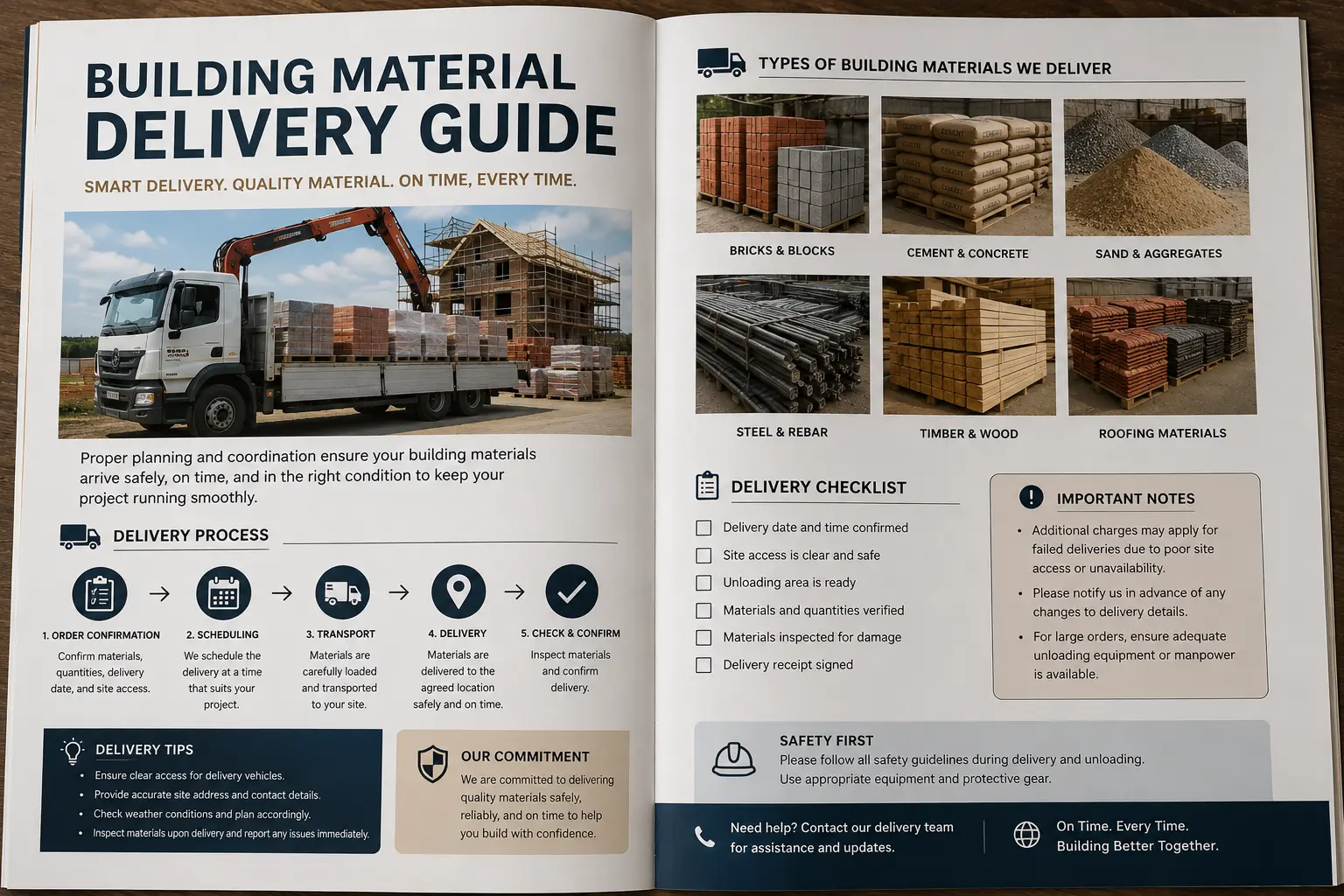
Step 7: Plan Delivery in Phases, Not Entire Dump

Contractors often overstock materials causing:

  • Theft
  • Damage
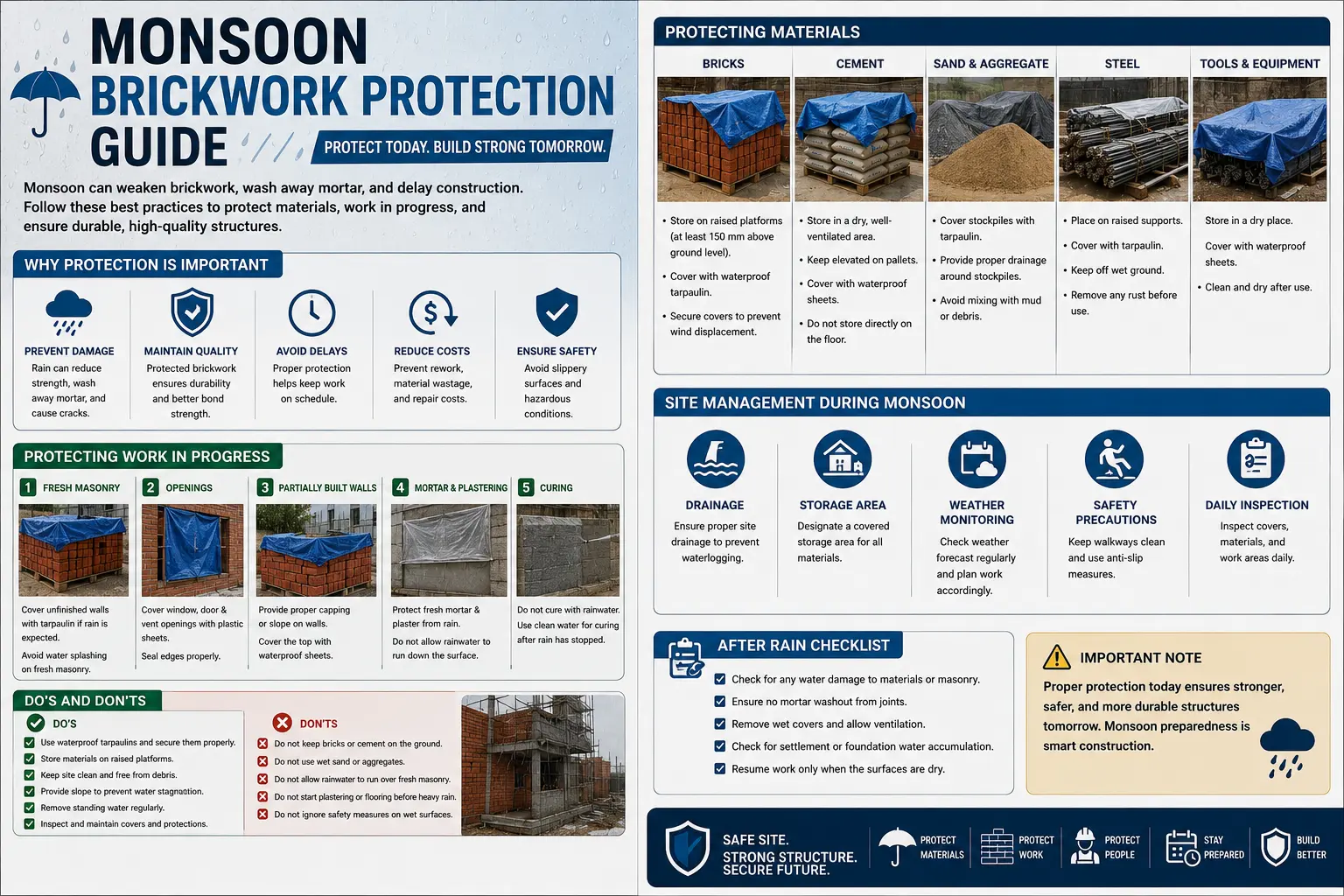
  • Moisture exposure
  • Space blockage
  • Double handling

Best practice:

Phase-wise Delivery Schedule

  • Foundation phase
  • Structure phase
  • Brickwork phase
  • Finishing phase

This improves inventory rotation and site efficiency.


Best Bulk Procurement Products for Contractors

Structural Brickwork Projects

Recommended:

Premium Exterior Elevation

Recommended:

Modern Architectural Projects

Recommended:

Budget Projects

Recommended:


Common Procurement Mistakes Contractors Must Avoid

Buying Only on Lowest Price

Lowest price often means:

  • Inconsistent quality
  • Hidden delivery charges
  • Supply failures

Ignoring Supplier Capacity

Small suppliers may fail during peak project demand.

No Written Confirmation

Always document:

  • Rate
  • Quantity
  • Specifications
  • Delivery terms

No Material Testing

Never trust verbal quality claims.


Technology & Digital Procurement Advantage

Modern contractors increasingly procure online for:

  • Faster quotations
  • Easier comparison
  • Live stock visibility
  • Digital invoices
  • Better delivery tracking

Explore:


Region-Wise Bulk Procurement Support

Contractors working across regions should partner with suppliers having strong delivery networks.

Popular supply zones:


Why Professional Contractors Prefer Organized Suppliers

Professional suppliers offer:

  • GST billing
  • Quantity assurance
  • Dispatch scheduling
  • Technical support
  • Batch consistency
  • Dedicated account handling

This helps contractors scale efficiently without procurement chaos.


Bulk Procurement Checklist for Contractors

Before Final Order:

Supplier Verification

  • Factory visit completed
  • References checked
  • Capacity verified

Quality Verification

  • Sample approved
  • Testing done
  • Specs documented

Commercial Verification

  • Rate locked
  • Taxes confirmed
  • Freight finalized

Delivery Verification

  • Dispatch plan made
  • Site unloading ready
  • Inventory schedule aligned

Final Thoughts

Bulk procurement is one of the most important profit drivers in construction contracting. Contractors who build structured procurement systems consistently outperform those who buy reactively.

By selecting reliable suppliers, locking specifications, negotiating smartly, and planning deliveries strategically, contractors can reduce cost, improve site productivity, and ensure timely project completion.

Whether your project requires premium red clay bricks, architectural exposed bricks, aggregates, sand, pavers, or full building material support, working with an organized bulk supplier simplifies procurement and improves project outcomes.


Contact UP Bricks for Bulk Contractor Orders

For contractor bulk procurement, project quotations, and scheduled deliveries:

Call: 9105079955
WhatsApp: 9540933000

Inquiry Form
Recent Blogs