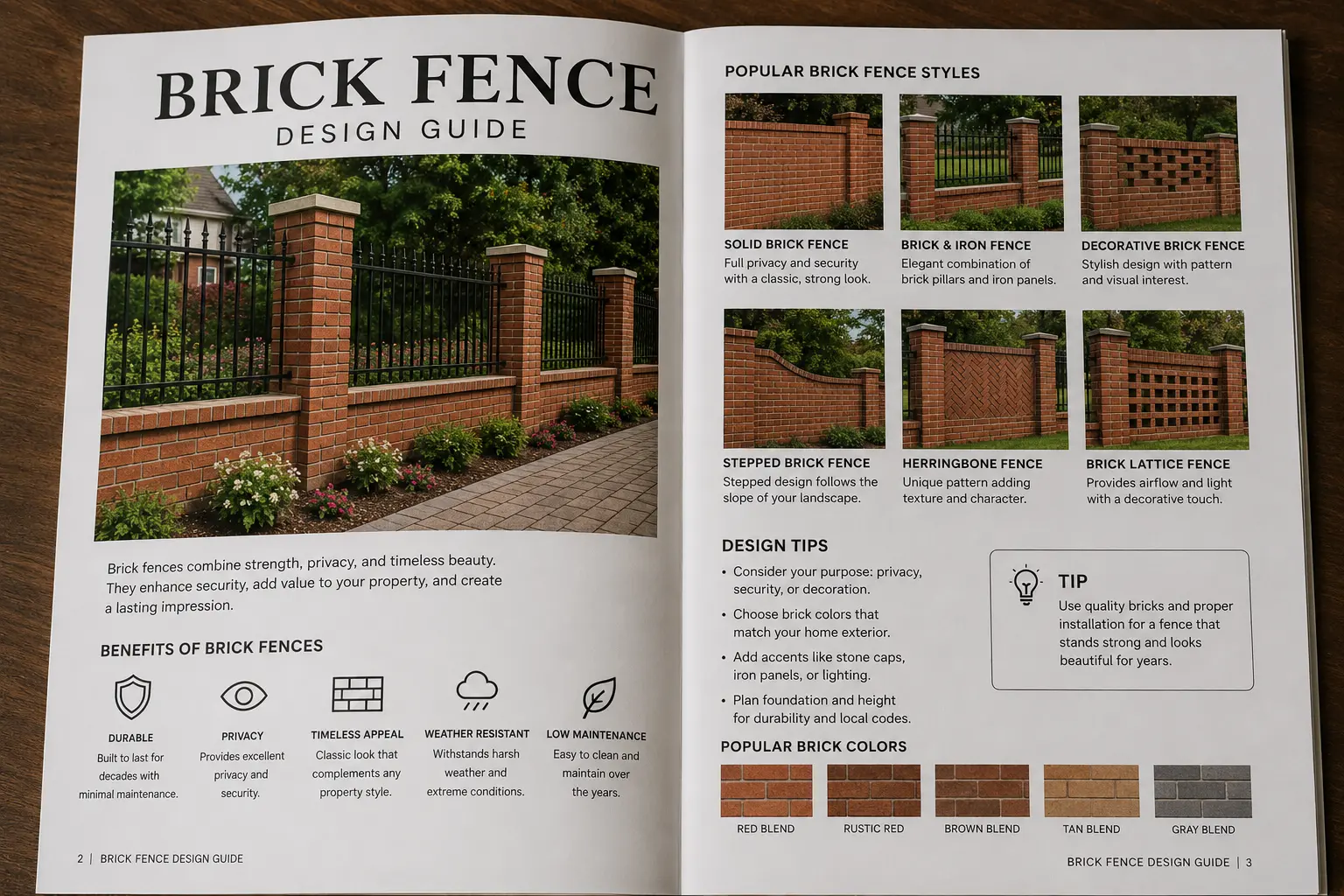
Brick Curing Time Guide – Complete Brickwork Curing Duration & Watering Guide For Strong Construction
Brick curing is one of the most important processes in masonry construction. Whether you are building a residential house, commercial building, boundary wall, farmhouse, warehouse, or Traditional & Modern architectural structure, proper brick curing directly affects:
-
wall strength
-
bonding quality
-
crack resistance
-
waterproofing performance
-
plaster durability
-
long-term building life
Many construction problems such as:
-
wall cracks
-
weak mortar joints
-
dampness
-
plaster failure
-
low strength masonry
-
seepage
happen because proper curing was not done after brickwork.
This complete Brick Curing Time Guide explains:
-
what brick curing is
-
ideal curing duration
-
curing methods
-
watering techniques
-
common curing mistakes
-
seasonal curing tips
-
curing for walls and masonry
-
how curing improves brick strength
-
best practices for long-lasting construction
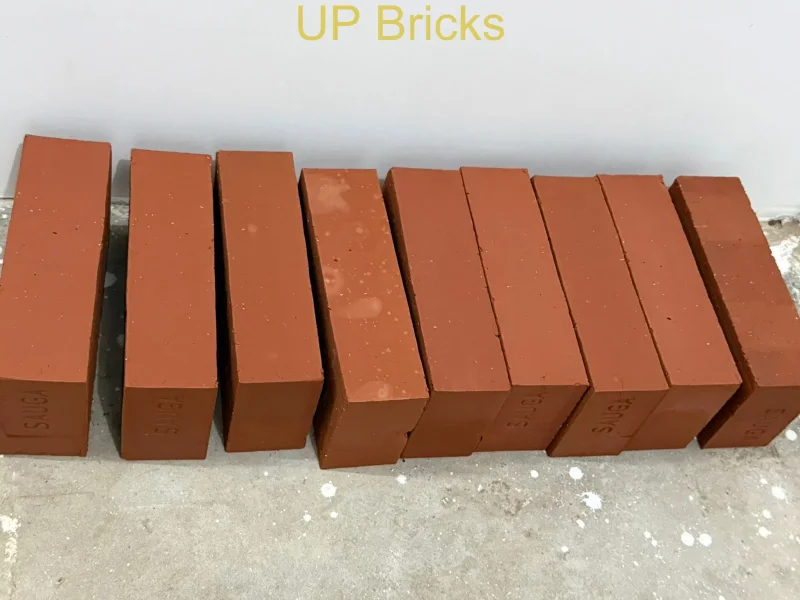
For premium quality bricks and durable construction materials, many builders and contractors prefer UP Bricks for residential and commercial construction supply.
What Is Brick Curing
Brick curing is the process of maintaining proper moisture in brick masonry after construction so that cement mortar gains full strength gradually.
Curing helps:
-
cement hydration
-
mortar bonding
-
crack prevention
-
strength development
-
shrinkage reduction
Without proper curing, masonry walls may become weak and develop long-term durability problems.
Why Brick Curing Is Important
Brick curing is important because cement mortar requires moisture to achieve proper strength.
Main Benefits Of Brick Curing
Stronger Brick Bonding
Proper curing improves mortar adhesion between bricks.
Crack Reduction
Curing reduces shrinkage cracks and wall settlement problems.
Better Waterproofing
Well-cured walls resist seepage better.
Improved Durability
Cured masonry lasts longer and performs better in different weather conditions.
Better Plaster Performance
Proper curing improves plaster grip and finish quality.
Related guides:
-
Brickwork Quality Control Guide
-
Brick Wall Crack Repair Guide
-
Damp Proofing For Brick Walls
-
Waterproof Brick Wall Guide
Ideal Brick Curing Time
For most construction projects, brick masonry curing should generally continue for:
7 to 14 days
Recommended Brick Curing Duration
| Construction Type | Recommended Curing Time |
|---|
| Small Internal Walls | 7 Days |
| External Walls | 10–14 Days |
| Boundary Walls | 10 Days |
| Commercial Structures | 14 Days |
| Hot Weather Construction | Extended Curing Recommended |
Best Time To Start Brick Curing
Brick curing usually starts:
-
24 hours after masonry work
This allows mortar to set properly before continuous water application.
How Brick Curing Works
Cement mortar gains strength through:
-
hydration reaction
-
moisture retention
-
gradual hardening
If water evaporates too quickly:
-
mortar weakens
-
cracks form
-
bonding reduces
Proper curing ensures slow and controlled strength development.
Step By Step Brick Curing Process
Step 1 – Allow Initial Mortar Setting
After brickwork:
-
wait approximately 24 hours
Do not start heavy water curing immediately.
Step 2 – Apply Controlled Water
Use:
-
pipe
-
sprinkler
-
mug
-
gentle water flow
Avoid:
-
excessive pressure
-
direct forceful spraying
Step 3 – Maintain Continuous Moisture
Walls should remain:
-
moist
-
cool
-
properly hydrated
Avoid complete drying during curing period.
Step 4 – Continue Curing Daily
Repeat curing:
-
2–3 times daily
depending on weather conditions.
Best Brick Curing Methods
Manual Water Curing
Most common site method.
Water is sprinkled manually using:
-
hose pipes
-
buckets
-
sprinklers
Sprinkler Curing
Suitable for:
-
large projects
-
commercial buildings
-
boundary walls
Provides:
-
uniform moisture distribution
Wet Covering Method
Used in:
-
hot weather
-
windy conditions
Wet jute bags or cloth maintain surface moisture.
Common Brick Curing Mistakes
Insufficient Curing Time
Stopping curing too early reduces wall strength.
Excessive Water Pressure
High pressure damages mortar joints.
Uneven Watering
Some wall portions dry faster than others.
Ignoring Weather Conditions
Hot weather requires additional curing.
Delayed Curing
Starting curing too late weakens mortar hydration.
Read:
-
Brick Construction Mein Common Site Mistakes
-
Brickwork Mein Overuse Of Water Se Kya Nuksan Hota Hai
Brick Curing In Summer Season
Hot weather causes rapid evaporation.
Summer Curing Tips
-
increase curing frequency
-
avoid afternoon curing only
-
use morning and evening watering
-
protect walls from direct heat
Read:
-
Summer Brickwork Construction Tips
-
Best Bricks For Hot Weather
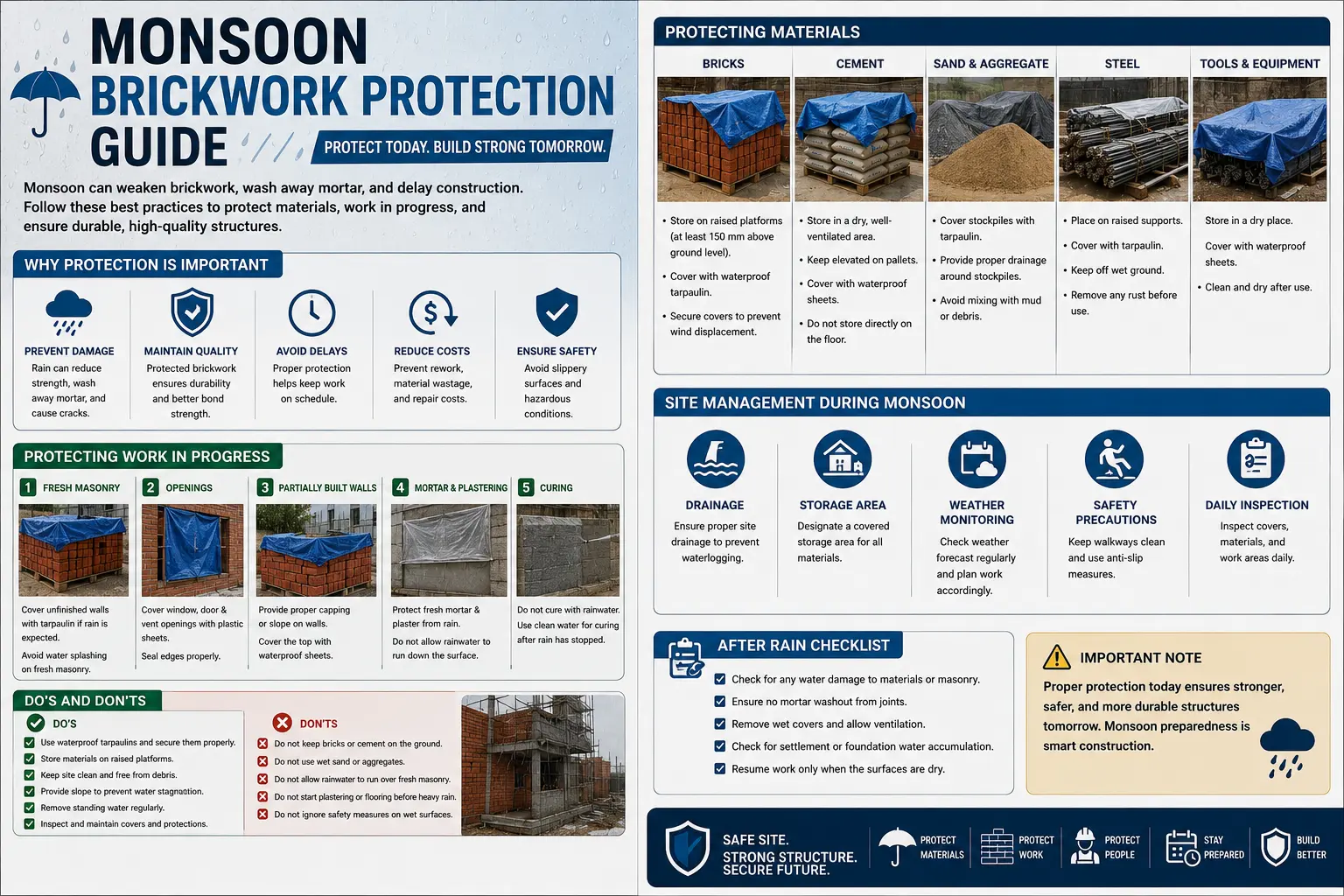
Brick Curing During Monsoon
Rain may create:
-
excessive moisture
-
mortar washing
-
weak joints
Monsoon Protection Tips
-
avoid overwatering
-
protect fresh walls from heavy rain
-
maintain drainage
Read:
-
Monsoon Brickwork Protection Guide
-
How Weather Affects Brick Construction
Brick Curing During Winter
Cold weather slows hydration.
Winter Curing Tips
-
maintain moderate moisture
-
avoid freezing water conditions
-
extend curing duration if needed
Read:
-
Winter Construction Material Guide
-
Best Bricks For Cold Weather
Importance Of Good Quality Bricks In Curing
Low-quality porous bricks absorb excessive moisture and weaken mortar bonding.
High-quality bricks improve:
-
moisture balance
-
mortar adhesion
-
curing efficiency
-
long-term durability
Recommended products:
How Proper Curing Improves Brick Wall Strength
Proper curing helps:
-
reduce shrinkage
-
improve compressive strength
-
strengthen mortar joints
-
reduce seepage risk
-
improve durability
Read:
-
Bricks Ki Compression Strength Kya Hoti Hai
-
Load Bearing Wall Construction Guide
-
Brick Masonry Ki Strength Kin Cheezon Par Depend Karti Hai
Brick Curing And Waterproofing Connection
Improper curing creates:
-
pores
-
weak joints
-
moisture gaps
This increases:
-
seepage
-
dampness
-
salt deposits
Proper curing improves waterproofing performance significantly.
Read:
-
Brick Efflorescence Solution Guide
-
Brick Wall Waterproofing Ke Aasan Tarike
-
Brick Wall Water Seepage Solution
Best Mortar Ratio For Proper Curing Performance
Correct mortar ratio is equally important.
Common mortar ratios:
depending on wall type.
Read:
-
Best Mortar Ratio For Brickwork
-
Cement Sand Ratio For Brick Wall
-
Brickwork Mein Cement Mortar Ratio Ka Mahatva
How Builders Ensure Better Brick Curing
Professional builders usually:
-
use quality bricks
-
follow curing schedules
-
monitor moisture levels
-
protect masonry from heat
-
maintain proper supervision
Read:
-
Brick Masonry Mein Site Supervision Kyon Zaruri Hai
-
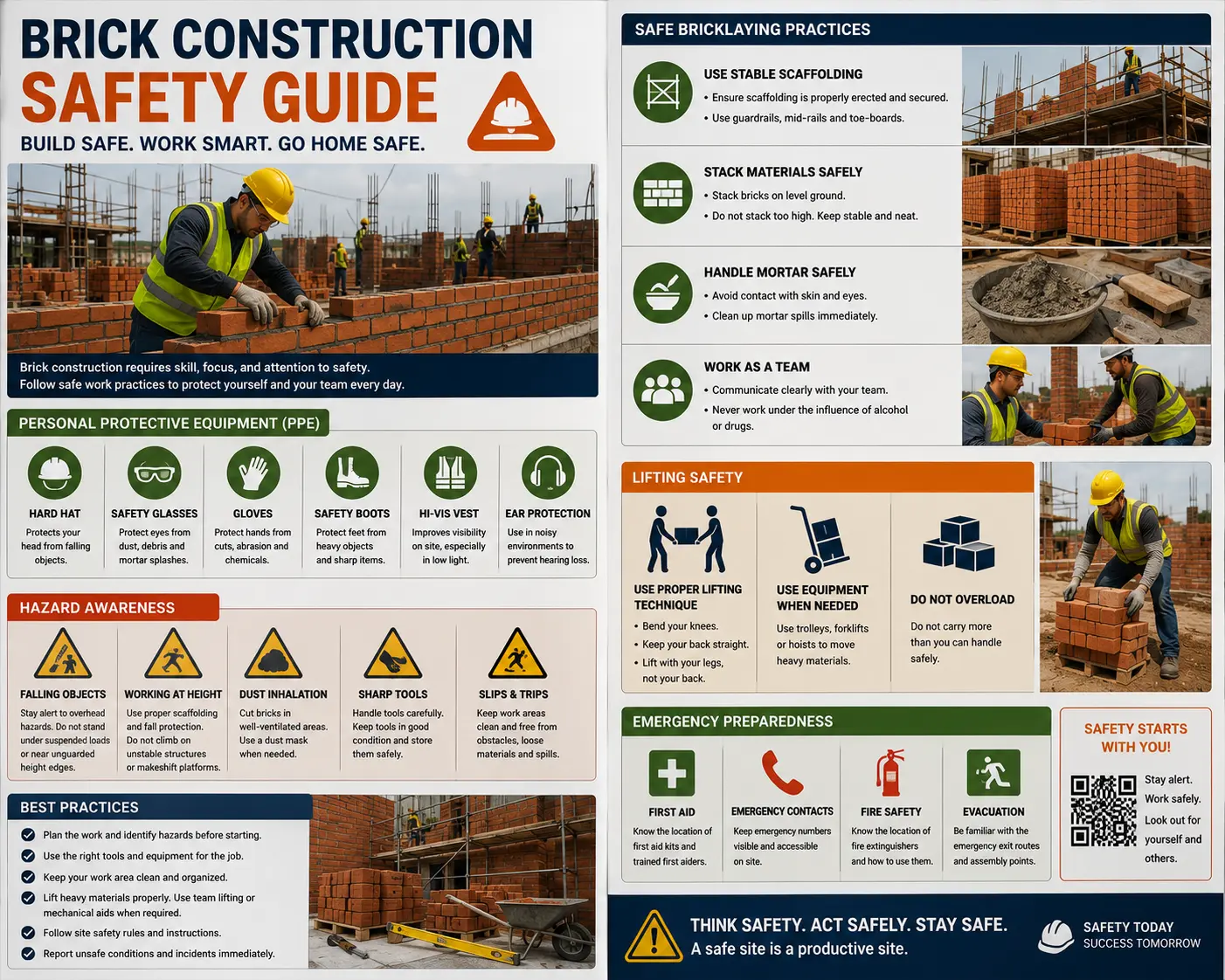
Construction Site Safety Tips
Why Builders Prefer UP Bricks
Many contractors, architects, engineers, and homeowners choose UP Bricks because:
-
strong kiln-burnt bricks
-
better moisture control
-
lower water absorption
-
commercial-grade supply
-
reliable delivery
-
multiple brick categories
Available products:
-
Red Clay Bricks
-
DBF Bricks
-
MBF Bricks
-
Fly Ash Bricks
-
Exposed Bricks
-
Sand
-
Aggregates
-
Construction materials
Explore:
10 Frequently Asked Questions (FAQs)
1. What is the ideal curing time for brickwork?
Brickwork should generally be cured for 7 to 14 days depending on weather and project type.
2. When should brick curing start?
Brick curing usually starts about 24 hours after masonry work.
3. Why is curing important in brickwork?
Curing improves mortar strength, bonding, durability, and crack resistance.
4. Can improper curing cause wall cracks?
Yes, insufficient curing often leads to shrinkage cracks and weak masonry.
5. How many times should walls be cured daily?
Usually 2–3 times daily depending on weather conditions.
6. Does hot weather require extra curing?
Yes, summer construction requires more frequent curing due to rapid evaporation.
7. Can excessive curing damage brickwork?
Excessive pressure or uncontrolled water flow may weaken mortar joints.
8. Which bricks perform better during curing?
Low water absorption premium bricks generally perform better.
9. Is curing important for boundary walls?
Yes, proper curing improves durability and waterproofing in boundary walls.
10. Does curing improve waterproofing?
Yes, proper curing reduces pores and improves moisture resistance.
Why UP Bricks Is Better For Strong Construction
UP Bricks supplies high-quality construction bricks for:
-
residential homes
-
villas
-
commercial buildings
-
warehouses
-
farmhouses
-
boundary walls
-
industrial projects
UP Bricks focuses on:
-
better strength
-
controlled water absorption
-
durable kiln-burnt bricks
-
premium finish quality
-
reliable bulk supply
Many contractors and builders choose UP Bricks for long-lasting and durable masonry construction.
WhatsApp For Premium Bricks & Construction Materials
81.webp)