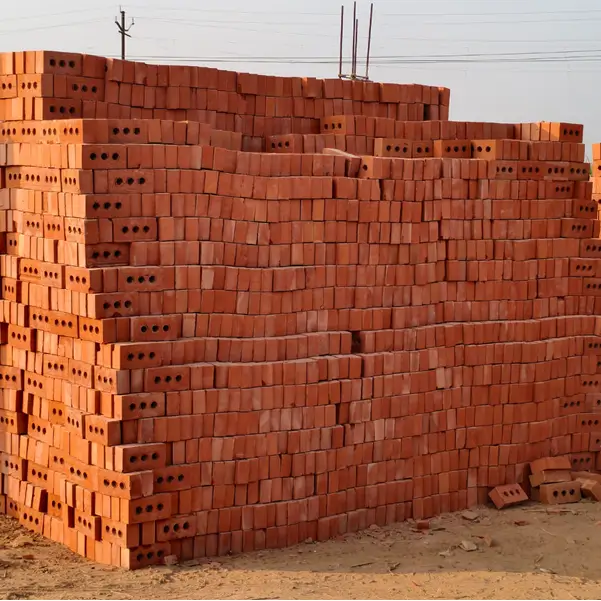
A 9 inch wall is one of the most commonly used wall thicknesses in residential, commercial, and boundary wall construction. It is typically used for external walls, load-bearing walls, structural partitions, and boundary walls because it provides better strength and stability than thinner walls.
To estimate brick quantity for a 9 inch wall accurately, builders calculate the total wall area and multiply it by the average number of bricks required per square foot.
This guide explains the standard 9 inch wall brick calculation method, thumb rules, formulas, and factors affecting the final quantity.
For most practical site calculations:
Applicable for standard:
Wall Area × 10 = Approx Brick Quantity
Suppose wall dimensions are:
20 × 10 = 200 Sq Ft
200 × 10 = 2,000 Bricks Approx
| Wall Area | Approx Bricks Required |
|---|---|
| 50 Sq Ft | 500 Bricks |
| 100 Sq Ft | 1,000 Bricks |
| 200 Sq Ft | 2,000 Bricks |
| 500 Sq Ft | 5,000 Bricks |
| 1000 Sq Ft | 10,000 Bricks |
Different brick sizes affect quantity.
Examples:
Larger mortar joints reduce brick count slightly.
Subtract openings from total wall area.
Always add:
For most practical construction estimates, a 9 inch wall requires approximately 10 bricks per square foot. This makes brick quantity estimation easy for contractors and homeowners during project planning.
Always adjust final calculations based on brick size, mortar thickness, openings, and wastage. Using premium-quality Red Clay Bricks, Red Bricks, or DBF Bricks ensures stronger and more durable 9 inch wall construction.
Approx 9–11 bricks.
10 bricks per sq ft.
Approx 1,000 bricks.
Approx 2,000 bricks.
Yes.
Yes.
Yes, 5–10%.
Yes.
Often yes.
Yes.
Use drawings and wall volume.
Yes.
Adjust for size differences.
Yes.
No.
For rough planning yes.
Yes.

81.webp)